:
:  :
:  CUBICLES CODERS PVT LTD
AI Customer Support Driving Smart Automation Efficiency
AI for Customer Support: Unlocking Efficiency with Smart Automation
Estimated reading time: 7 minutes
Key Takeaways
- AI-driven customer support enhances response times and customer satisfaction.
- Automation tools like chatbots and virtual assistants reduce operational costs.
- Businesses benefit from personalized interactions based on historical data.
- The scalability of AI allows businesses to manage high demand efficiently.
- Future trends include emotionally intelligent AI and integration with IoT devices.
Table of Contents
- Introduction
- Growing Adoption of AI Support
- Examples of AI Automation in Customer Support
- How AI Fits into Business Solutions
- Real-World Case Studies of AI for Customer Support
- Step-by-Step Guide to Implementing AI for Customer Support
- Benefits and Tips for Maximizing AI in Customer Support
- Future Trends in AI for Customer Support
- FAQ
- Conclusion
Introduction

In today’s fast-paced digital era, AI for Customer Support has become a game-changer for businesses worldwide. From startups to established enterprises, the adoption of AI-driven support solutions is rapidly growing. Why? Because customers demand faster responses, personalized interactions, and 24/7 availability—a tall order for human agents alone. Enter AI technologies that not only meet these requirements but also reduce overhead costs and uplift overall customer satisfaction.
Globally, sectors such as e-commerce, telecommunications, banking, and healthcare are leading this AI support adoption surge. In India, the digital revolution and rapid online customer base expansion have accelerated the need for smarter customer support systems. This article explores the rising trend of AI support adoption, real-world automation examples, and how AI seamlessly fits into business solutions to future-proof customer engagement.
Whether you’re exploring ways to enhance your support desk or considering integrating AI tools, this comprehensive overview will help you understand the what, why, and how of AI in customer support. Ready to transform your customer service? Let’s dive in.
Growing Adoption of AI Support

Customer expectations have changed dramatically in the past decade. According to recent studies, over 60% of customers expect instant responses online. Companies worldwide are deploying AI-powered support tools to keep pace.
- E-commerce giants use AI to instantly resolve queries about orders or returns.
- Telecom providers leverage chatbots to troubleshoot basic connectivity issues.
- Banks automate fraud detection alerts and streamline customer onboarding.
- Healthcare platforms provide symptom-checking virtual assistants to patients.
The benefits are clear—AI dramatically reduces wait times and eliminates customer frustration from long queues or after-hours queries. Moreover, AI support adoption also helps in cutting operational costs by automating repetitive tasks and freeing human agents to handle more complex issues.
Another important factor driving AI adoption is scalability. During high demand periods, such as holiday sales or service outages, AI systems handle spikes effortlessly without needing to scale staff proportionally.
Examples of AI Automation in Customer Support
AI-driven automation comes in many forms, each designed to improve customer interactions and operational efficiency. Here are some of the most prevalent examples:
| AI Automation Tool | Description | Business Impact |
|---|---|---|
| Chatbots | Respond to common questions instantly. | Enhance first contact resolution rates. |
| Virtual Assistants | Conduct multi-turn conversations for complex issues. | Improve customer satisfaction. |
| Automated Ticketing | Categorize and prioritize tickets automatically. | Streamline agent workload allocation. |
| Sentiment Analysis | Detect customer mood to prioritize urgent cases. | Enhance proactive support. |
| Self-Service Portals | AI-powered FAQs and knowledge bases. | Empower customer self-resolution. |
| Voice Recognition | Understand and respond to voice queries in call centers. | Increase call empathy and efficiency. |
| Predictive Analytics | Forecast issues or customer needs before they arise. | Drive proactive and personalized support. |
These tools contribute to a richer, more seamless customer journey by speeding up response times and enriching interaction quality. They also enable businesses to collect valuable insights on customer preferences and pain points in real-time.
How AI Fits into Business Solutions
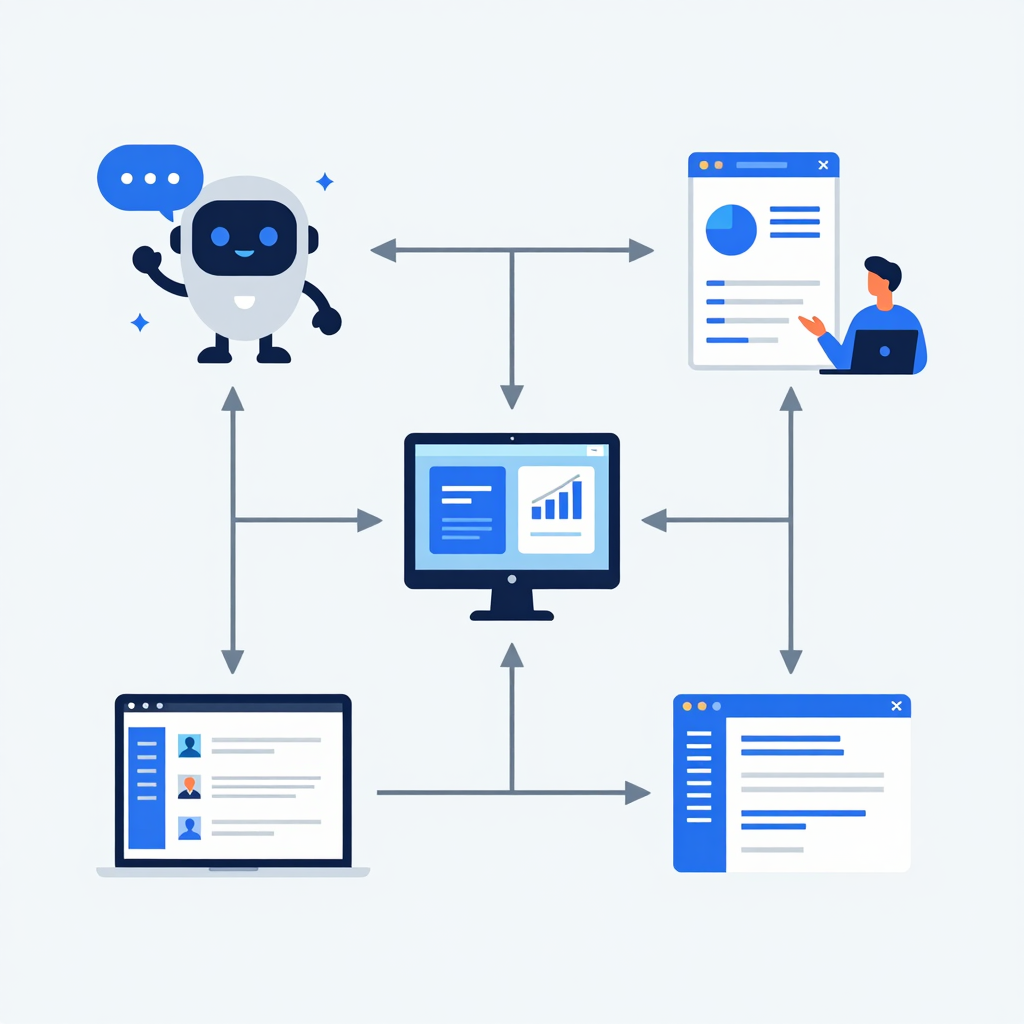
Integrating AI into your business is not just about technology—it’s a strategic shift designed to enhance multiple facets of customer support. Here’s how AI fits perfectly into modern business solutions:
- Scalability: AI handles a growing volume of requests without exponentially increasing costs.
- Personalization: Tailors customer interactions based on historic data and behavior patterns.
- Efficiency: Automates repetitive support processes, allowing human agents to focus on complex queries.
- Insights: Provides analytics on customer trends, feedback, and sentiment for informed decision-making.
- Omnichannel Support: Offers consistent experiences across chat, email, social media, and phone.
- Continuous Improvement: Learns from interactions to adapt responses and enhance performance over time.
By aligning AI with business goals, companies can create a customer-first culture marked by responsiveness, reliability, and relevance.
Real-World Case Studies of AI for Customer Support
- E-commerce Leader: Flipkart (India) – Flipkart employs AI chatbots to resolve over 40% of customer queries related to orders, returns, and payments instantly. This has reduced average response time by 60%, boosting customer satisfaction during peak festival sales.
- Telecommunications: Vodafone – Vodafone uses AI-powered virtual assistants across multiple languages to support millions of customers worldwide. Their automated ticketing system routes complex issues to specialized agents, improving first-contact resolution by 30%.
- Banking: Bank of America – The bank’s virtual assistant, Erica, helps over 10 million users navigate banking services, provide transaction alerts, and detect unusual activity using predictive analytics. This integration has enhanced customer engagement and reduced call center volume.
- Healthcare: Apollo Hospitals – Apollo deployed AI chatbots and symptom checkers accessible 24/7, assisting patients with appointment scheduling and basic diagnostics. This reduces call center strain and accelerates patient support.
These examples demonstrate how AI adoption is not limited to tech companies; it fits AI business solutions across diverse sectors, improving customer service quality and business outcomes.
Step-by-Step Guide to Implementing AI for Customer Support
Want to integrate AI into your customer support system? Follow these simple, actionable steps:
- Evaluate Your Needs: Identify repetitive tasks and high volume queries suitable for automation.
- Set Clear Objectives: Define what success looks like—faster response times, higher CSAT scores, or reduced costs.
- Choose the Right AI Tools: Select chatbots, voice assistants, or ticketing automation that align with your business size and sector.
- Integrate with Existing Systems: Ensure seamless connection with your CRM, helpdesk software, and omnichannel platforms.
- Train Your AI Models: Use existing customer interaction data to teach your AI how to understand queries accurately.
- Launch a Pilot: Start with limited rollout to monitor performance and gather feedback.
- Analyze and Optimize: Continuously review AI efficiency, customer feedback, and improve algorithms.
- Scale Gradually: Expand AI coverage across all support channels as confidence and accuracy grow.
Following this roadmap ensures smooth AI adoption with measurable results.
Benefits and Tips for Maximizing AI in Customer Support
- 24/7 Availability: Customers get instant help anytime—across time zones.
- Cost Reduction: Automating low-value tasks trims operational expenses.
- Improved Agent Experience: Agents focus on high-value interactions, reducing burnout.
- Consistent Support: AI provides uniform answers without human error.
- Data-Driven Decisions: Leverage AI insights for continuous service improvements.
- Customer Empowerment: Self-service options increase trust and engagement.
Tips:
– Keep human backup ready for complex queries.
– Regularly update AI knowledge bases.
– Monitor AI conversations for quality and accuracy.
– Personalize AI responses using customer data responsibly.
Future Trends in AI for Customer Support
The future of AI support adoption is promising and dynamic:
- Emotionally Intelligent AI: Future bots will better detect emotions and empathize with customers.
- Voice-First Support: Increased integration of voice assistants will change how customers seek help.
- AI+Human Collaboration: Enhanced interfaces where AI triages and assists agents in real-time.
- Hyper-Personalization: AI will anticipate needs before customers even ask.
- Integration with IoT: Devices will diagnose and report issues autonomously to customer support.
Staying ahead with these emerging trends will provide substantial competitive advantages.
FAQ
Q1: Is AI for customer support expensive to implement?
A1: Initial investment varies, but AI reduces long-term costs by automating routine tasks and improving efficiency.
Q2: Can AI fully replace human agents?
A2: AI complements human agents by handling repetitive queries; complex problems still need human expertise.
Q3: How soon can a business see results after adopting AI?
A3: Many companies notice improvements within weeks, especially in response time and customer satisfaction metrics.
Q4: Is AI safe and reliable for customer data?
A4: Yes, provided businesses use secure platforms and comply with data privacy regulations.
Conclusion
The era of AI for customer support is here—and its growing adoption signals a transformative shift in how businesses interact with customers. By incorporating AI-driven automation like chatbots, virtual assistants, and sentiment analysis, companies across industries can scale support efficiently while personalizing experiences. AI perfectly fits into business solutions by enhancing scalability, efficiency, and insights, all while keeping costs manageable.
If you’re looking to stay competitive and delight customers in this digital-first world, it’s time to embrace AI-powered customer support solutions.
Contact us today! Discover how AI can revolutionize your customer service and set your business apart.
Related Posts:
Recent Blog

Build a Multi-Vendor Marketplace for Startup Success
Build Your Own Multi-Vendor Marketplace Like Amazon: A Startup’s Guide…
How AI Chatbots Improve Customer Support and Sales
How AI Chatbots Improve Customer Support & Sales: Unlocking the…

10 Signs Your SME Needs Custom Software Now
10 Signs Your Business Needs a Custom Software Solution Estimated…