:
:  :
:  CUBICLES CODERS PVT LTD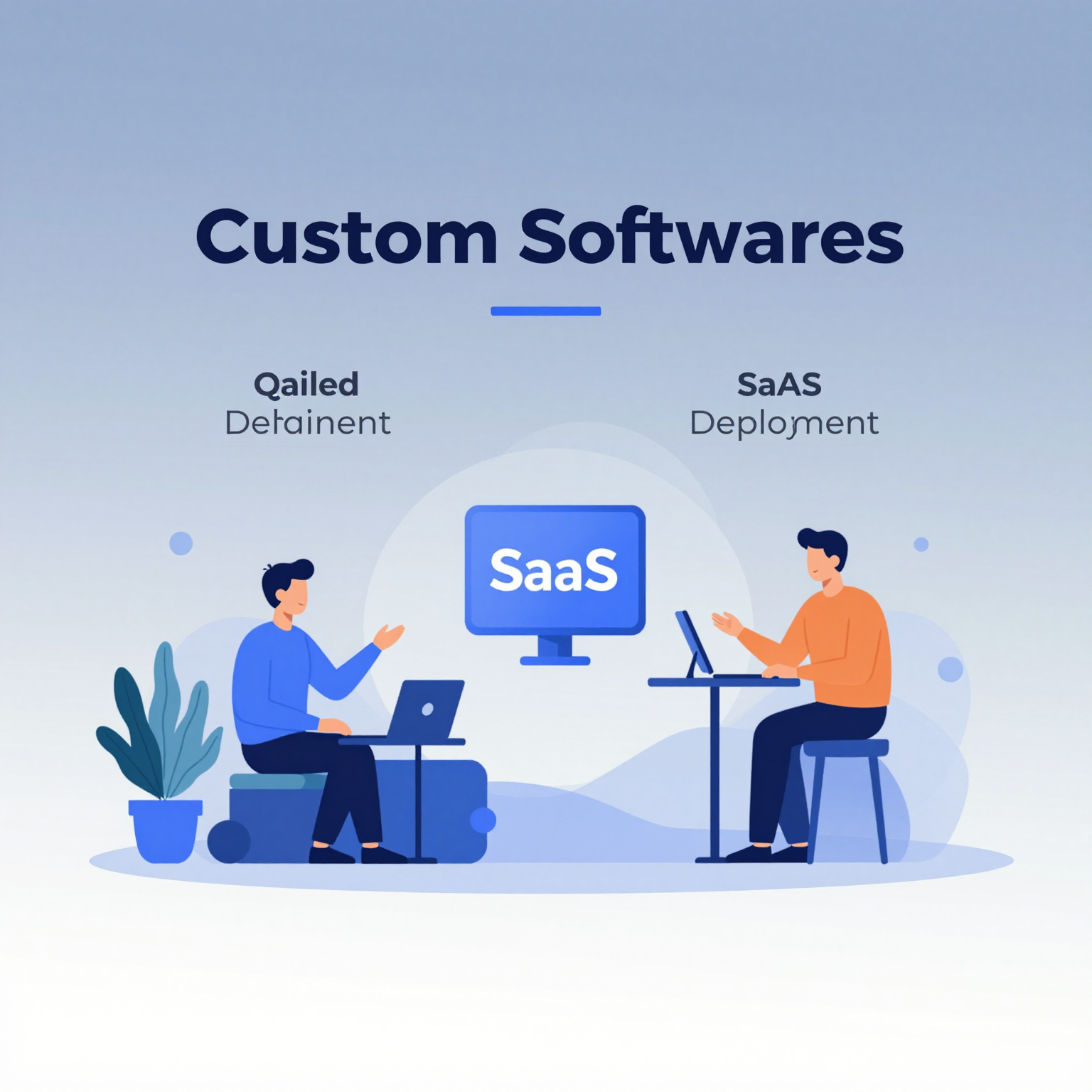
Custom Software vs SaaS: Best Choice for Growing Businesses
Custom Software vs SaaS: Which Is Better for Growing Businesses?
Estimated reading time: 7 minutes
Key Takeaways
- Choosing between SaaS and custom software is critical for operational efficiency.
- SaaS offers quick deployment and lower initial costs, but with limited customization.
- Custom software provides tailored solutions, enhancing scalability and competitive advantage.
- The choice depends on business complexity, budget constraints, and long-term strategy.
- Monitoring trends in software development helps businesses stay ahead.
Table of Contents
Introduction
Businesses around the globe are increasingly leveraging technology to improve efficiency, customer experience, and innovation. The rising demand for software solutions has made Software as a Service (SaaS) and custom software development two dominant choices. But which one suits a growing business best?
The decision is more than budgetary—it revolves around how software aligns with business complexity, adaptability, and long-term strategy. SaaS products like Salesforce, Zoom, and HubSpot are appealing for their ease of use and quick deployment, especially for startups and SMEs. However, as businesses grow, they encounter unique challenges that off-the-shelf solutions might not address effectively.
India, being a global tech hub, illustrates this trend vividly. Many startups and scale-ups leverage SaaS initially but soon realize the need for custom software solutions to remain competitive and streamline their operations uniquely. This guide compares both choices so businesses globally can choose the right path to sustainable growth.
What Is SaaS?
SaaS stands for Software as a Service, representing cloud-based applications hosted remotely by vendors and accessed online. SaaS solutions typically operate on subscription models, offering immediate access without traditional installation or hardware requirements.
SaaS Benefits:
- Lower upfront costs: No major capital expenditure on building software.
- Quick deployment: Ready to use in minutes or days.
- Continuous updates: Vendor manages upgrades, ensuring you always have the latest features.
- Scalability: Easily increase or decrease usage based on needs.
- Accessibility: Available on any device with internet connectivity.
SaaS Drawbacks:
- Limited customization: Businesses must adapt to software capabilities, which may limit unique workflows.
- Subscription costs accumulate: Recurring fees can surpass the cost of custom solutions over time.
- Data security concerns: Storing data on third-party servers can pose risks.
- Vendor lock-in risk: Dependency on vendor’s infrastructure, uptime, and support.
Despite these downsides, SaaS remains attractive for businesses prioritizing speed and lower initial costs.
What Is Custom Software?
Custom software is developed uniquely for a business, addressing its specific processes, challenges, and goals. It can be built from scratch or adapted from existing platforms, designed to fit seamlessly into the organization’s ecosystem.
Custom Software Benefits:
- Tailored functionalities: Software matches your exact workflows, eliminating workarounds.
- Competitive advantage: Deliver unique features that set your business apart.
- Complete ownership: Control over your software and data security.
- Flexible integration: Easily connect with other internal systems or tools.
- Cost-effective long-term: No ongoing subscription fees; ownership leads to long-term savings.
- Enhanced scalability: Adapt features quickly as business evolves.
Custom Software Drawbacks:
- Higher initial investment: Developing software requires upfront budgeting.
- Longer time to deployment: Development, testing, and implementation take time.
- Ongoing maintenance responsibility: You must support and update the software internally or via a partner.
For businesses with complex or unique workflows, custom software often delivers higher value.
Which Should Your Growing Business Choose?
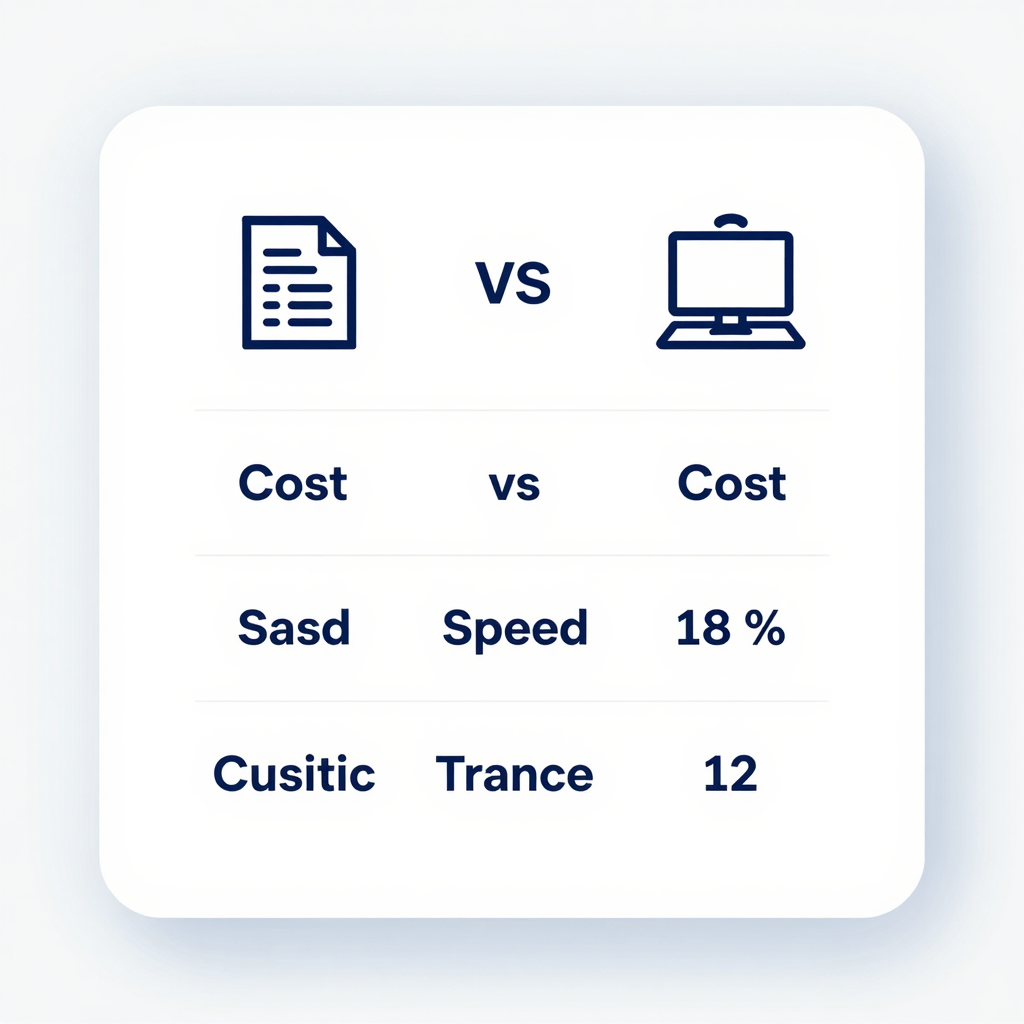
Choosing between SaaS and custom software depends on multiple factors. The following table summarizes key considerations:
| Factor | SaaS | Custom Software |
|---|---|---|
| Budget | Low initial cost; ongoing subscription | Higher upfront cost; lower ongoing cost |
| Speed to Market | Rapid deployment | Development time needed |
| Business Complexity | Best for standard, common workflows | Ideal for unique, complex processes |
| Scalability | Easy to scale on demand | Scalable with custom architecture |
| Control & Ownership | Limited control, vendor dependent | Full control over software & data |
| Customization | Limited, templated features | Fully customizable |
Understanding these factors in your business context is essential. For example, startups may benefit from SaaS due to speed and cost, while companies scaling rapidly with unique workflows may find custom software indispensable.
Real-World Examples: SaaS and Custom Software in Action
1. Retail Industry
SaaS: Small boutique stores use Shopify to launch e-commerce sites quickly.
Custom: Large retail chains invest in custom inventory and CRM systems integrated with logistics platforms to optimize supply chains.
2. Healthcare Sector
SaaS: Clinics use SaaS-based telemedicine platforms for remote consultation.
Custom: Hospitals build custom patient management solutions tailored to specific medical protocols and data privacy requirements.
3. Financial Services
SaaS: Fintech startups leverage SaaS accounting and compliance tools to accelerate launch.
Custom: Banks develop custom risk assessment platforms with proprietary algorithms.
4. Manufacturing
SaaS: Manufacturing units use SaaS ERP systems for standard workflows.
Custom: Complex factories integrate IoT and robotics with custom software for automation and monitoring.
These examples illustrate that as business needs grow specialized, custom software often becomes the preferred choice.
Step-by-Step Decision Guide: Choosing Between Custom Software and SaaS
- Assess Your Business Needs: Identify whether your processes are standardized or unique.
- Evaluate Budget Constraints: Consider upfront vs long-term costs.
- Analyze Time to Market: Determine how quickly you need software deployed.
- Consider Scalability Requirements: Plan for future growth and feature flexibility.
- Security & Control: Decide if data ownership and compliance require in-house control.
- Review Vendor Reliability: Assess SaaS vendor track record if applicable.
- Plan for Maintenance: Decide who will support, update, and evolve the software.
- Seek Expert Advice: Consult with development professionals to gauge feasibility and costs.
This structured approach empowers informed decision-making aligned to strategic goals.
Benefits and Tips for Investing in Custom Software
- Maximize Competitive Edge: Tailored features enhance uniqueness.
- Improve Efficiency: Automation of niche processes cuts costs and errors.
- Increase Flexibility: Quickly adapt software as business dynamics shift.
- Ensure Data Security: Strong control over sensitive customer and business data.
- Plan for Growth: Scalable architecture supports expanding operations.
Tips for success:
- Choose a reliable development partner with domain expertise.
- Start with a minimum viable product (MVP), then expand iteratively.
- Invest in strong project management and testing phases.
- Budget for ongoing maintenance and future enhancements.
Future Trends in Custom Software and SaaS
The landscape of business software is evolving rapidly:
- Hybrid models: Combining SaaS base platforms with custom modules for flexibility.
- AI and Automation: Both SaaS and custom software increasingly integrate AI-driven analytics and workflows.
- Low-code/No-code: Accelerating custom software development through visual tools.
- Cloud-native custom solutions: Leveraging cloud infrastructure for scalability and cost-efficiency.
- Greater emphasis on security and compliance, especially in regulated sectors.
Growing businesses should closely monitor these trends to stay ahead.
Conclusion
Choosing Custom Software vs SaaS: Which Is Better for Growing Businesses? is not a one-size-fits-all decision. While SaaS solutions offer speed and low upfront costs, custom software delivers tailored innovation, scalability, and control—key factors for fast-growing companies with unique operational needs.
Companies seeking a long-term competitive advantage often benefit from investing in custom software development services that align precisely with their business strategy and growth plans. Partnering with expert developers ensures you unlock the full potential of your software as a strategic asset.
Ready to explore how custom software can drive your business growth? Contact us today for a free consultation and start your journey towards tailored innovation!
FAQ
Q1: Is SaaS cheaper than custom software?
Initially yes, due to no development costs. Over time, SaaS subscription fees can exceed custom software’s total cost of ownership, especially for large-scale or long-term use.
Most SaaS offer limited customization through settings and integrations, but they can’t fully adapt to complex or unique workflows like custom software can.
Q3: How long does custom software development take?
Typically from a few months to over a year, depending on complexity and scope.
Q4: What about data security in SaaS?
SaaS providers implement strong security but storing sensitive data externally may pose compliance challenges compared to owning custom software.
Q5: Can I migrate from SaaS to custom software later?
Yes, many businesses start with SaaS and transition to custom solutions to support growth and evolving needs.
Recent Blog
Top Web Development Trends Every Business Must Know in 2026
Top Web Development Trends Every Business Should Know in 2026…

Agentic AI vs Traditional Automation: Key Changes in 2026
Agentic AI vs Traditional Automation: What’s Changing in 2026? Estimated…

Future of AI Startups Driving the Ongoing Boom
The Future of AI Startups: Why the AI Startup Boom…