:
:  :
:  CUBICLES CODERS PVT LTD
Why Software Testing Matters for AI Applications
The Importance of Software Testing in AI-Powered Applications: Ensuring Quality in AI-Generated Code
Estimated reading time: 7 minutes
Key Takeaways
- Software testing is crucial for maintaining the quality of AI-powered applications.
- Complexity and unpredictability in AI models necessitate specialized testing approaches.
- Ethical considerations and bias mitigation are essential elements of software validation.
- Automated testing frameworks enhance efficiency and speed up release cycles.
- Regular monitoring and maintenance are critical for AI applications post-deployment.
Table of Contents

Introduction
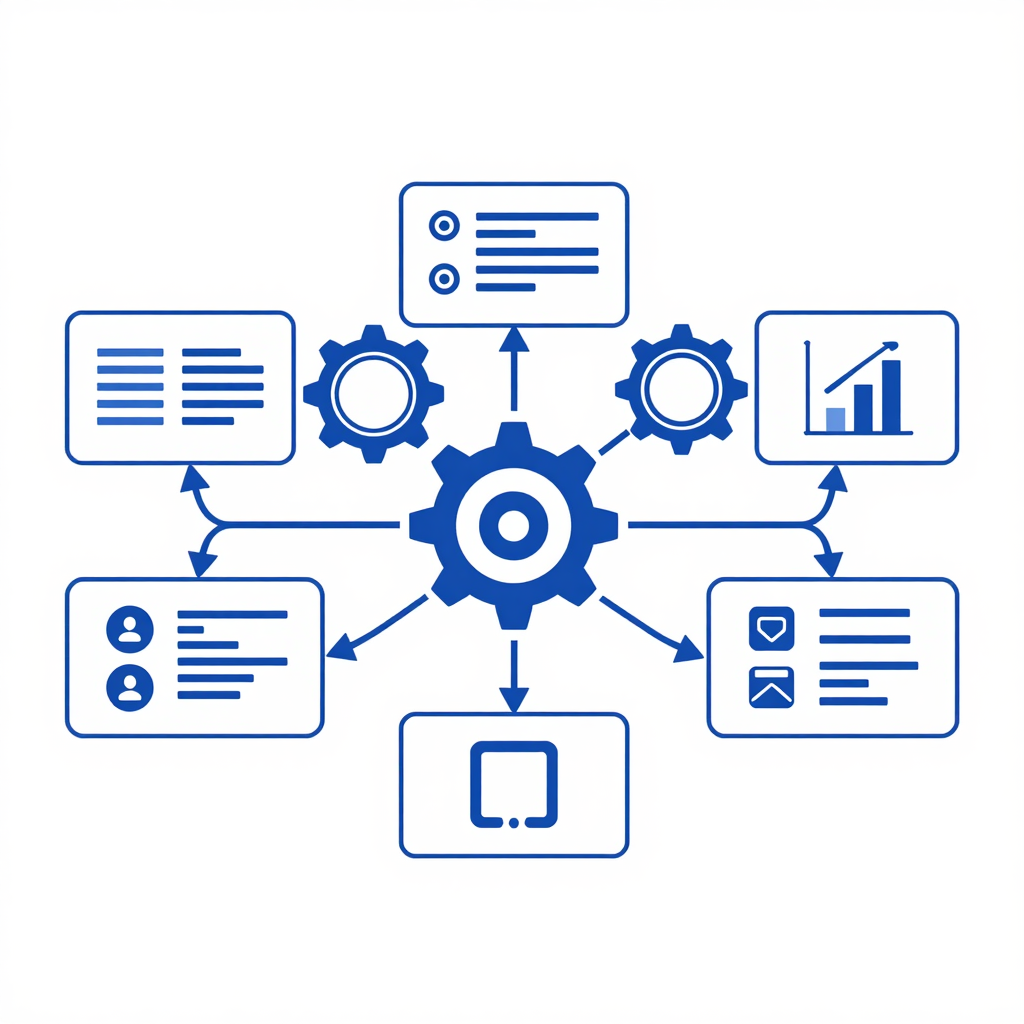
Artificial Intelligence (AI) has revolutionized the way businesses operate, empowering applications to make smarter decisions, process complex data, and improve user experiences. With AI-powered applications becoming ubiquitous—from healthcare diagnostics to financial forecasting and autonomous vehicles—the importance of software testing in AI-powered applications cannot be overstated. Given the adaptive nature and unpredictability of AI models, traditional software testing tools and methods often fall short of the requirements set by AI-integrated systems.
Moreover, AI-generated code requires quality assurance to ensure reliability, security, and ethical compliance. Developers increasingly use AI-assisted coding tools to speed up development cycles, but this convenience makes thorough QA testing even more critical. This article delves into why testing AI applications is essential, explores best practices, and highlights specialized QA services companies should consider to mitigate risks and promote trust in AI technologies globally, including rapidly growing markets like India.
Why is Software Testing Essential for AI-Powered Applications?
Complexity and Unpredictability in AI Systems
AI applications depend on complex machine learning models that adapt based on data input. Unlike classical algorithms with predictable logic, AI models evolve and sometimes behave unexpectedly when encountering new data. Testing ensures these systems perform optimally across a broad spectrum of scenarios, preventing errors that could have severe consequences—especially in critical domains like healthcare or finance.
Quality of AI-Generated Code
AI-assisted code generation accelerates development but introduces challenges. Generated code is not immune to bugs, logical fallacies, or vulnerabilities. Quality assurance processes must verify the accuracy, maintainability, and security of both AI-produced and traditionally written code to prevent costly failures down the line.
Ethical Considerations and Bias Mitigation
AI applications can inadvertently perpetuate biases embedded in their training data, leading to unfair or harmful outcomes. Testing for fairness and bias is therefore a fundamental part of software validation. Regular bias audits help promote ethical AI deployment, fostering user trust and regulatory compliance.
Security and Compliance
Handling sensitive information brings regulatory scrutiny. Testing must address security vulnerabilities and ensure compliance with data protection laws such as GDPR or HIPAA. Robust testing identifies and mitigates risks such as data leaks or unauthorized access before deployment.
Best Practices for Testing AI-Powered Applications
1. Test Data Quality and Management
Good data fuels good testing. Ensure datasets used in testing are diverse and reflective of real-world situations, avoiding overfitting or underrepresented cases. Continually refreshing data guards against model drift caused by changing user behavior or environments.
2. Multi-Level Testing Strategy
Implement a layered approach:
- Unit Testing: Check individual components of AI models—for example, testing feature extraction functions for precision.
- Integration Testing: Validate interactions between AI modules and regular application components, ensuring smooth data flow.
- System Testing: Evaluate end-to-end functionality under realistic conditions, including user interfaces.
- Performance Testing: Measure response times, scalability and resource utilization, especially important for AI tasks with heavy computational needs.
3. Model Validation and Verification
Use statistical and visualization tools:
- Cross-validation for assessing model generalizability.
- Confusion matrices, precision-recall curves, and ROC plots for classification accuracy.
- Regular retraining and testing cycles to maintain model relevance and accuracy over time.
4. Automated Testing and Continuous Integration (CI)
Leverage automation frameworks for regression and load tests. Integrate AI testing within CI/CD pipelines for fast feedback loops, enabling developers to detect defects early and accelerate release cycles.
5. Bias and Fairness Testing
Use specialized frameworks like IBM’s AI Fairness 360 or Google’s What-If Tool to pinpoint biases. Follow up with corrective actions including data augmentation, algorithm adjustments, or human-in-the-loop oversight.
Highlighting QA Services for AI-Powered Applications
As AI grows more mainstream, several QA service providers now offer specialized testing packages tailored to AI requirements:
AI Model Testing Services
- Rigorous validation of machine learning algorithms, data pipelines, and output accuracy.
- Simulated testing to assess model behavior in edge cases and stress conditions.
Code Quality Assurance
- Testing AI-generated code to uncover logical bugs, security issues, and adherence to coding standards.
- Automated static and dynamic analysis coupled with manual code reviews.
Functional and Non-Functional Testing
- Verifying usability, reliability, failover, and scalability.
- Security testing to identify vulnerabilities like data leakage or adversarial attacks on AI components.
Continuous Monitoring and Maintenance
- Post-deployment oversight with real-time monitoring of model predictions and system health.
- Adaptive testing cycles to handle AI model updates and new vulnerabilities.
Compliance and Ethical Auditing
- Aligning AI development with regulatory frameworks.
- Ensuring transparency and accountability through audit trails and ethical norm checks.
Organizations can rely on such comprehensive QA services to reduce risks inherent in AI deployment and maintain trusted applications that scale effectively across industries.
Real-World Examples of AI Software Testing
- Healthcare: Hospitals deploying AI diagnostic tools routinely test models against diverse patient datasets to minimize misdiagnosis and bias, enhancing patient safety.
- Finance: AI fraud detection algorithms undergo intensive testing using transaction simulations to detect false positives and adapt to evolving fraud tactics.
- Retail: AI-driven recommendation engines are continuously performance tested to ensure latency meets customer expectations and recommendations remain relevant.
- Automotive: Autonomous vehicle software integrates multi-stage testing procedures, including simulations and real-world drives, to guarantee safety and compliance.
These industries demonstrate how rigorous testing strengthens AI reliability and user confidence.
Future Trends in AI Software Testing
- Explainability Testing: Emerging tools for ensuring AI decisions are transparent and interpretable.
- AI-Driven Testing Tools: Using AI itself to automate test design and defect prediction.
- Federated Learning Testing: Securely validating models trained across distributed data sources.
- Ethics Integration: Embedding fairness and compliance checks as automated steps in AI workflows.
Staying ahead of these trends will help organizations future-proof AI applications amid regulatory and market shifts.
Conclusion
The importance of software testing in AI-powered applications is paramount in delivering reliable, secure, and ethical AI solutions. By adopting best practices—such as maintaining high-quality test data, leveraging automated continuous testing, and focusing on bias and fairness—organizations can unlock AI’s full potential while minimizing risks. Specialized QA services tailored to the unique challenges of AI development further help businesses build trustworthy applications that scale globally.
Contact us today! Let us help you design a robust testing plan ensuring your AI application’s success and compliance from development through deployment.
FAQ
Q1: How is testing AI applications different from traditional software testing?
A1: AI applications often involve non-deterministic outputs, data-driven decision-making, and model retraining, requiring additional focus on model validation, bias detection, and continuous learning testing, beyond usual functional tests.
Q2: Can AI-generated code be trusted without testing?
A2: No, AI-generated code may contain hidden bugs or inefficiencies. Quality assurance is crucial for catching errors and ensuring code meets security and functionality standards.
Q3: What tools are recommended for bias testing in AI?
A3: Tools like IBM AI Fairness 360, Google What-If Tool, and Fairlearn provide automated bias detection and fairness metrics for assessing AI models.
Q4: How often should AI models be retested?
A4: Retesting frequency depends on data changes and application criticality, but periodic retraining and validation—monthly or quarterly—is advisable to maintain accuracy.
Q5: What industries benefit most from AI software testing services?
A5: Healthcare, finance, automotive, retail, and any sector deploying AI applications that impact safety, security, or compliance greatly benefit from specialized AI software testing.
Recent Blog

Build a Multi-Vendor Marketplace for Startup Success
Build Your Own Multi-Vendor Marketplace Like Amazon: A Startup’s Guide…
How AI Chatbots Improve Customer Support and Sales
How AI Chatbots Improve Customer Support & Sales: Unlocking the…

10 Signs Your SME Needs Custom Software Now
10 Signs Your Business Needs a Custom Software Solution Estimated…