:
:  :
:  CUBICLES CODERS PVT LTD
How Platform Engineering Boosts Developer Productivity
How Platform Engineering Improves Developer Productivity: A Strategic Advantage for Technical Leadership

Estimated reading time: 8 minutes
Key Takeaways

- Platform engineering enhances developer productivity by standardizing development environments.
- Self-service capabilities reduce operational overhead, allowing developers to focus on coding.
- Automation decreases manual errors and accelerates delivery cycles.
- Improved observability offers real-time insights into application health.
- Cross-team collaboration streamlines workflows and accelerates project delivery.
Table of Contents

- Introduction
- The Rising Trend: Why Platform Engineering Adoption is Increasing
- Key Benefits of Platform Engineering
- Impact on Developer Productivity: Concrete Outcomes
- Real-World Examples Across Industries
- Step-by-Step Guide to Implementing Platform Engineering
- Future Trends in Platform Engineering
- Conclusion
- FAQ
Introduction

In today’s fast-paced software development environment, how platform engineering improves developer productivity has become a critical question for technical leadership aiming to showcase engineering excellence. As organizations globally adapt to increasingly complex systems, the adoption of platform engineering is accelerating. It offers the power to streamline workflows, reduce overhead, and empower developers with a robust internal developer platform (IDP). From startups in India to multinational corporations, platform engineering is revolutionizing how software gets built, tested, and deployed.
Platform engineering is more than just creating better infrastructure; it is about abstracting complexity, automating repetitive tasks, and providing self-service tools that enable developers to focus on what they do best: coding. This article will explore core benefits, real-world applications, and the strategic impact of platform engineering on developer productivity. Let’s dive into why technical leadership is championing this movement and how your organization can benefit too.
The Rising Trend: Why Platform Engineering Adoption is Increasing
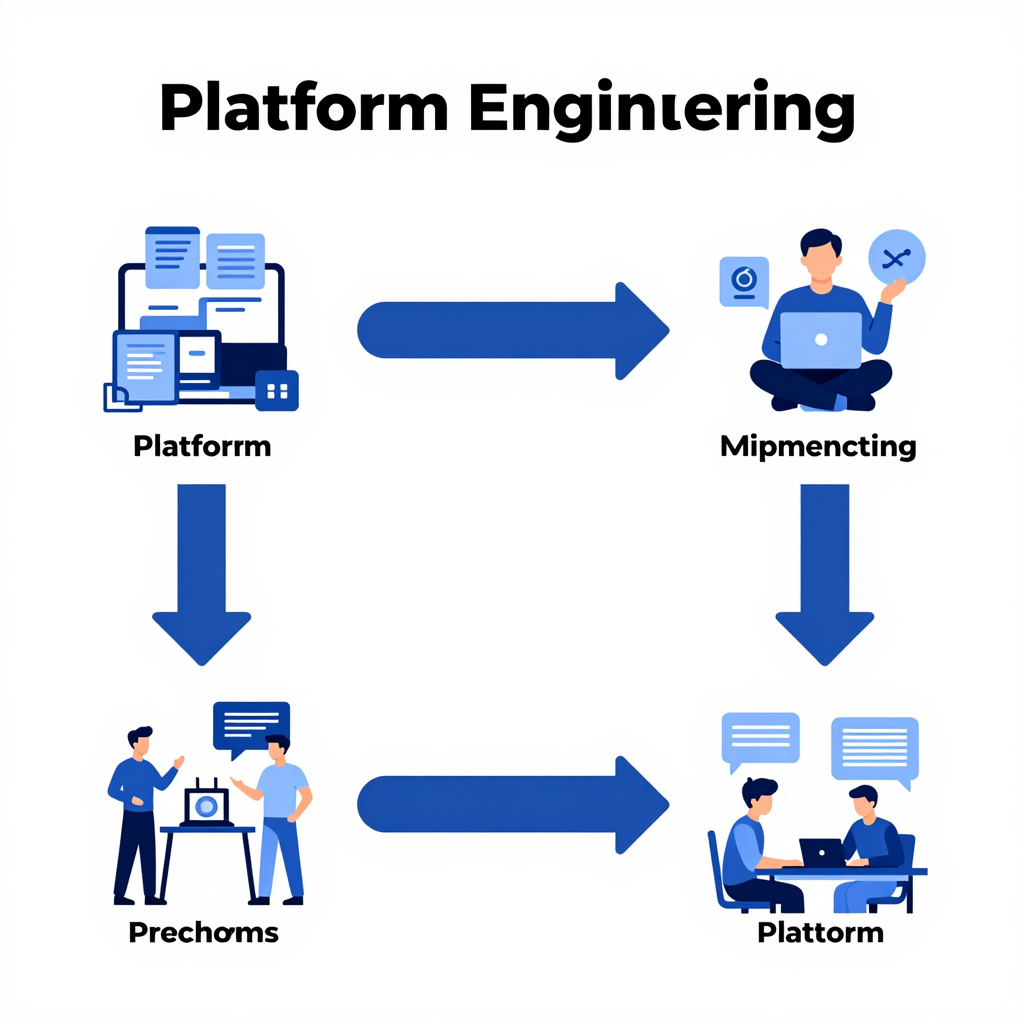
The surge in platform engineering adoption is driven by the necessity to handle growing software delivery demands efficiently. According to recent industry surveys, over 70% of enterprises report that internal developer platforms significantly improve deployment frequency and reduce time-to-market. Organizations face challenges like fragmented toolchains, inconsistent environments, and slow onboarding—all issues platform engineering directly addresses.
By consolidating tools and best practices into an integrated platform, businesses can create a reliable backbone supporting continuous integration and delivery (CI/CD), observability, and collaboration. This trend is not only reshaping developer workflows but also redefining technical leadership roles, emphasizing engineering excellence and measurable performance improvements.
Key Benefits of Platform Engineering
1. Standardization and Consistency
One of the foundational benefits of platform engineering is the creation of a standardized environment. Developers across teams access identical APIs, tools, and infrastructure configurations, which minimizes the risk of integration errors. This uniformity ensures secure, compliant deployments and simplifies audits and governance.
2. Self-Service Capabilities
Platform engineering equips developers with on-demand access to environments, compute resources, and CI/CD pipelines. This self-service approach drastically cuts down wait times for approvals or resource provisioning, allowing developers to focus more on writing and improving code rather than managing operational overhead.
3. Automation of Repetitive Tasks
Automation lies at the heart of platform engineering. From provisioning to deployment and monitoring, repetitive operational activities are scripted and managed automatically. This not only reduces manual errors but also accelerates delivery cycles, boosting developer morale by freeing them from mundane, error-prone tasks.
4. Improved Observability and Feedback Loops
Embedding telemetry and alerting tools within the platform provides developers with real-time visibility into application health. Faster identification of issues leads to quicker fixes, reducing downtime and supporting continuous improvement through data-driven decision-making.
5. Scalable and Flexible Infrastructure
Modern development demands agility. Platform engineering supports scalable resource allocation and multi-language environments, enabling teams to spin up new services quickly and adjust capacity based on needs without disruption.
6. Enhanced Collaboration
Cross-functional teams, including developers, DevOps, and Site Reliability Engineers (SREs), benefit from a shared platform that streamlines communication and workflow integration. This promotes knowledge sharing and reduces friction during handoffs, contributing to smooth project delivery.
Impact on Developer Productivity: Concrete Outcomes
Technology leaders have reported remarkable productivity gains and smoother development pipelines post-platform engineering adoption:
- Reduced context switching: Developers remain focused on feature development rather than setup or troubleshooting.
- Faster onboarding: New hires get up to speed quickly with consistent environments and documented processes.
- Increased deployment frequency: Automating pipelines allows more frequent and reliable releases.
- Fewer production incidents: Early detection and swift incident handling decrease downtime and improve user experience.
Real-World Examples Across Industries
- FinTech: A leading bank implemented an internal developer platform to standardize API development and security protocols, resulting in a 40% faster release cycle.
- Healthcare: A medical software company automated compliance checks and environment provisioning, reducing audit preparation time by 60%.
- E-commerce: A global retailer scaled their customer-facing platform rapidly during peak sales by utilizing scalable infrastructure provided by platform engineering practices.
These examples showcase the versatility and impact of platform engineering on diverse business domains and highlight the overarching value of investing in internal platforms.
Step-by-Step Guide to Implementing Platform Engineering
- Assess current pain points and developer workflows: Understand existing bottlenecks to tailor your platform.
- Define clear objectives aligned with business goals: Ensure technical investments drive measurable improvements.
- Build or adopt an internal developer platform (IDP): Integrate tools that facilitate automation, self-service, and scalability.
- Standardize APIs, infrastructure, and workflows: Enforce best practices to reduce variability.
- Embed observability and monitoring: Implement real-time insights to enable proactive management.
- Promote cross-team collaboration: Foster alignment among developers, DevOps, and SRE teams.
- Train and onboard teams: Ensure smooth adoption by providing documentation and support.
- Continuously iterate based on feedback: Use data to refine platform features and performance.
Future Trends in Platform Engineering
Platform engineering is evolving rapidly, with several key trends on the horizon:
- AI-Driven Automation: More intelligent automation of platform operations, including predictive scaling and anomaly detection.
- Increased Cloud-Native Adoption: Leveraging Kubernetes, serverless, and microservices architectures for enhanced platform flexibility.
- Expansion Into Non-Technical Domains: Empowering product managers and QA engineers with self-service tools.
- Focus on Developer Experience: Prioritizing intuitive interfaces and reducing cognitive load to maximize developer satisfaction.
Technical leadership’s role will increasingly involve steering platform evolution to maintain a competitive edge through engineering excellence.
Conclusion
Platform engineering represents a paradigm shift in how organizations manage software development. By delivering standardized tools, automation, and self-service capabilities, it profoundly enhances developer productivity and accelerates innovation cycles. For technical leaders aiming to showcase engineering excellence, adopting platform engineering is a strategic investment with measurable returns.
Are you ready to empower your teams and elevate your software delivery? Contact us today to learn how our platform engineering solutions can transform your development lifecycle and drive business success.
FAQ
What is platform engineering, and why is it important?
Platform engineering focuses on creating and maintaining internal developer platforms that simplify and automate software delivery, leading to improved productivity and quality.
How does platform engineering reduce developer context switching?
By providing ready-to-use environments, automated pipelines, and self-service tools, developers spend less time setting up or troubleshooting infrastructure and more time on coding.
Can platform engineering frameworks adapt to different industries?
Absolutely. Whether fintech, healthcare, e-commerce, or beyond, platform engineering principles are customizable to align with varied compliance, scalability, and workflow requirements.
What role does technical leadership play in platform engineering?
Technical leaders drive strategic investment in platform tools, foster a culture of continuous improvement, and champion engineering excellence through measurable delivery improvements.
How do I start implementing platform engineering in my organization?
Begin by assessing current challenges, defining objectives, building an integrated platform, and promoting collaboration and continuous iteration based on feedback.
Recent Blog

Build a Multi-Vendor Marketplace for Startup Success
Build Your Own Multi-Vendor Marketplace Like Amazon: A Startup’s Guide…

How AI Chatbots Improve Customer Support and Sales
How AI Chatbots Improve Customer Support & Sales: Unlocking the…

10 Signs Your SME Needs Custom Software Now
10 Signs Your Business Needs a Custom Software Solution Estimated…