:
:  :
:  CUBICLES CODERS PVT LTD
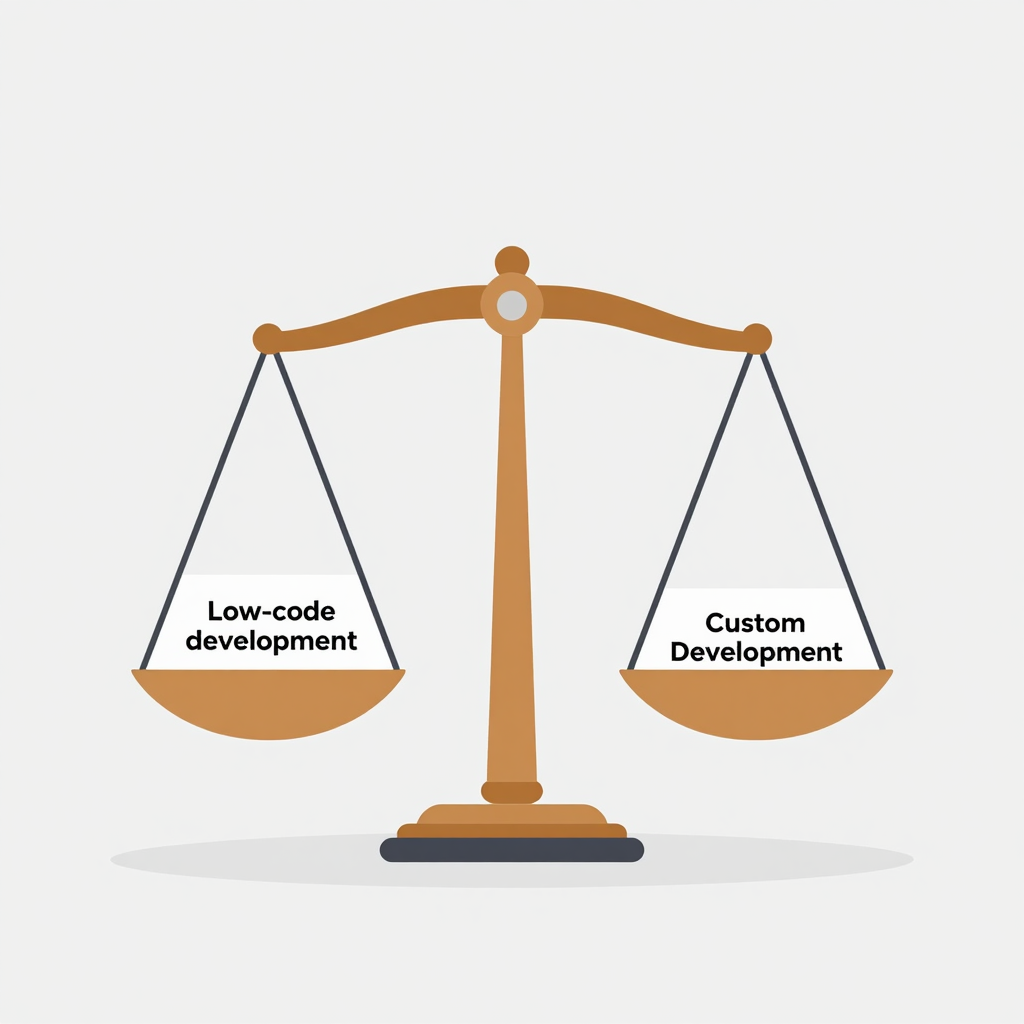
Low-Code vs Custom Development Cost Comparison
Low-Code vs Custom Development: The Real Cost Comparison You Need to Know
Estimated reading time: 8 minutes
Key Takeaways
- Understanding the trade-offs between low-code and custom development is essential for effective decision-making.
- Low-code platforms excel in speed and cost efficiency, while custom development offers full control and scalability.
- Each approach has specific scenarios where it shines—know when to choose one over the other.
- The long-term benefits of custom development can outweigh its higher upfront costs in complex environments.
- Future trends indicate a growing hybrid approach, combining the strengths of both low-code and custom solutions.
Table of Contents
Introduction
Low-code adoption is accelerating rapidly across industries worldwide, driven by the need to deliver applications faster and streamline digital transformation. But with all the hype around low-code platforms, many businesses face a difficult choice: low-code vs custom development — which approach offers the best value? Understanding the real cost comparison is essential to making the right strategic decision.
Low-code platforms enable users — including those without deep coding expertise — to build apps through visual interfaces, pre-built components, and automation. This results in significantly reduced upfront development costs and faster time to market. Yet, is low-code always the clear winner?
In this article, we will explore exactly when custom development adds value and outperforms low-code solutions — from complex customizations and performance demands to long-term cost efficiency and security concerns. As digital projects become more mission-critical, knowing the true cost and benefits of both approaches can save time, money, and headache.
Whether you’re a startup in Bangalore or a large enterprise in New York, this comprehensive comparison will help you weigh your options and select the best path forward in today’s fast-evolving tech landscape.
The Growing Trend: Why Low-Code Adoption is Accelerating
The global low-code development platform market is projected to reach $45.5 billion by 2025, expanding at a Compound Annual Growth Rate (CAGR) of over 28%[^1]. This explosive growth is fueled by several factors:
- Speed: Businesses want to launch applications faster than traditional development allows.
- Cost Efficiency: Low-code minimizes upfront costs by reducing the need for highly specialized developers.
- Democratization of Development: Citizen developers can create solutions without heavy IT intervention.
- Agility: Rapid iterations and deployments enhance competitiveness.
However, industry reports reveal around 40% of companies eventually hit limitations with low-code platforms when their needs outgrow the product’s capabilities[^2]. This highlights the persistent role of custom development in specific scenarios.
When is Low-Code Ideal?
- Building straightforward internal tools and workflows
- Rapid prototyping and MVPs (Minimum Viable Products)
- Projects with limited budgets or tight deadlines
- Organizations aiming to empower business users
When Might It Fall Short?
- Complex, bespoke business logic
- Large-scale, high-performance systems
- Deep integrations with legacy or external systems
- Industries with strict security or compliance requirements
Understanding these boundaries is key before committing fully to one approach.
When Custom Development Adds Value
While low-code offers undeniable advantages, custom development shines in areas where precision, scalability, and control are paramount. Here’s when it makes the most sense:
1. Complex, Highly Tailored Requirements
Custom software excels when businesses require intricate, unique workflows or integrations that cannot be realized within the constraints of a low-code platform. For instance, a fintech startup developing a proprietary trading algorithm or a healthcare provider implementing HIPAA-compliant patient management will benefit enormously from custom-built solutions.
2. Performance and Scalability Demands
Applications involving real-time data processing, AI-driven insights, or large-scale data analytics often require finely tuned performance optimizations impossible to achieve efficiently on low-code platforms. Custom code can be architected to maximize database queries, caching, and server resource use.
3. Full Control Over the System
Unlike low-code platforms that enforce vendor dependency and introduce lock-in risks, custom development grants organizations complete ownership of source code. This allows flexibility to modify, extend, or switch hosting environments without disruption.
4. Long-Term Cost Efficiency for Large Enterprise Systems
Though custom development carries higher initial costs, it often proves more economical for large, mission-critical applications because it eliminates ongoing license fees and enables tailored maintenance strategies. For example, a multinational retail corporation investing in an omnichannel ecommerce platform may see lower total cost of ownership with a bespoke solution.
5. Security and Compliance Requirements
Certain industries—such as finance, healthcare, and government—face strict regulations that demand advanced security measures or audit trails beyond generic platform capabilities. Custom development gives organizations the freedom to implement proprietary security controls tailored to compliance needs.
Cost Comparison Snapshot: Low-Code vs Custom Development
| Factor | Low-Code | Custom Development |
|---|---|---|
| Upfront Development Cost | Lower (rapid build, less coding) | Higher (specialized developers, longer build) |
| Time to Market | Faster | Slower |
| Flexibility & Customization | Limited by platform capabilities | Unlimited |
| Maintenance & Upgrades | Platform-managed; can be simpler but potentially costly | Requires dedicated team; full control |
| Vendor Lock-In Risk | Higher | Lower |
| Long-Term Licensing Fees | Can be significant | None or minimal |
| Performance Optimization | Limited | High |
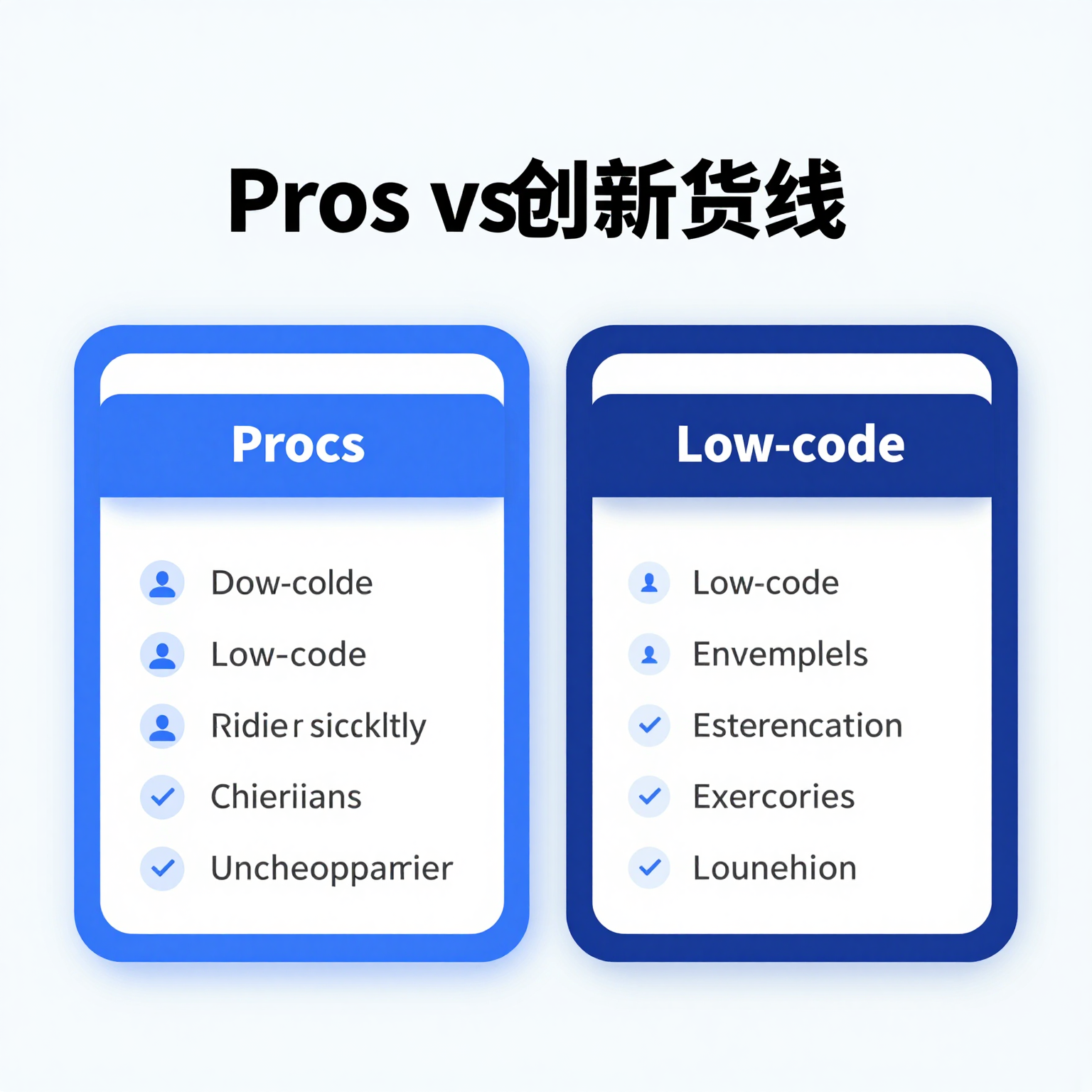
This table summarizes key differences that impact budgets, timelines, and system longevity. Many companies start with low-code to prototype but switch to custom development as demands increase.
Real-World Examples of Choosing Custom Over Low-Code
- Healthcare System Integration: A leading hospital network needed a secure, custom EMR (Electronic Medical Record) system integrated with multiple external labs and health information exchanges. Low-code tools lacked the granularity and compliance assurance, so they opted for custom development. The new system improved patient data accuracy and met regulatory requirements.
- Financial Trading Platform: A fintech firm developing a real-time trading platform used custom development for low-latency data processing and rigorous stress testing. Attempts to use low-code platforms resulted in unacceptable performance bottlenecks.
- Global Ecommerce Portal: A multinational retailer built a bespoke ecommerce backend to enable complex promotions, inventory workflows across countries, and tailored customer experiences—features not feasible on their chosen low-code platform.
- Government Workflow Automation: A government agency needed a secure, auditable case management system that complied with stringent data privacy laws. Custom development allowed them to build from the ground up and maintain control over security protocols.
These examples highlight that while low-code accelerates simpler projects, custom software delivers where precision and control matter most.
Conclusion
Choosing between low-code vs custom development involves much more than upfront cost comparisons. While low-code adoption is accelerating for good reasons like speed and accessibility, custom development still adds significant value for complex, high-performance, or highly customized applications.
Careful evaluation of functional requirements, total cost of ownership, risk tolerance, and future scalability is essential. The right approach may even combine both, leveraging low-code for rapid prototyping and custom code for long-term mission-critical systems.
Contact us today! We can help you assess your needs and craft a development strategy that balances cost, control, and capability—whether through low-code, custom development, or a hybrid.
FAQ
Is low-code suitable for all business applications?
No, low-code works well for simple workflows, prototyping, and standard applications but can be limiting for highly complex or regulated systems.
How much faster is low-code compared to custom development?
Low-code can reduce development time by 50-70% for simple to medium complexity apps but may require longer for custom features.
Will I own the code if I use a low-code platform?
Typically, no. You usually own your data and app configurations but not the underlying platform source code.
What are vendor lock-in risks with low-code?
Dependency on platform-specific components, pricing changes, and limited export options create lock-in risks.
Can I migrate from low-code to custom development later?
Yes, though it can be complex. Planning for migration early is recommended.
Word count: 1,788
[^1]: Gartner, Low-Code Development Platforms Market Forecast 2022-2025
[^2]: Forrester, The State of Low-Code Development Report 2023
Recent Blog

API-First Development for Scalable, Future-Proof Applications
API-First Development: Building Future-Proof Applications Businesses Demand Scalable Integrations Estimated…

Geo vs SEO: How AI Optimization Boosts Local Search Ranking
GEO vs SEO: Understanding the Rise of GEO and How…
Top Web Development Trends Every Business Must Know in 2026
Top Web Development Trends Every Business Should Know in 2026…