:
:  :
:  CUBICLES CODERS PVT LTD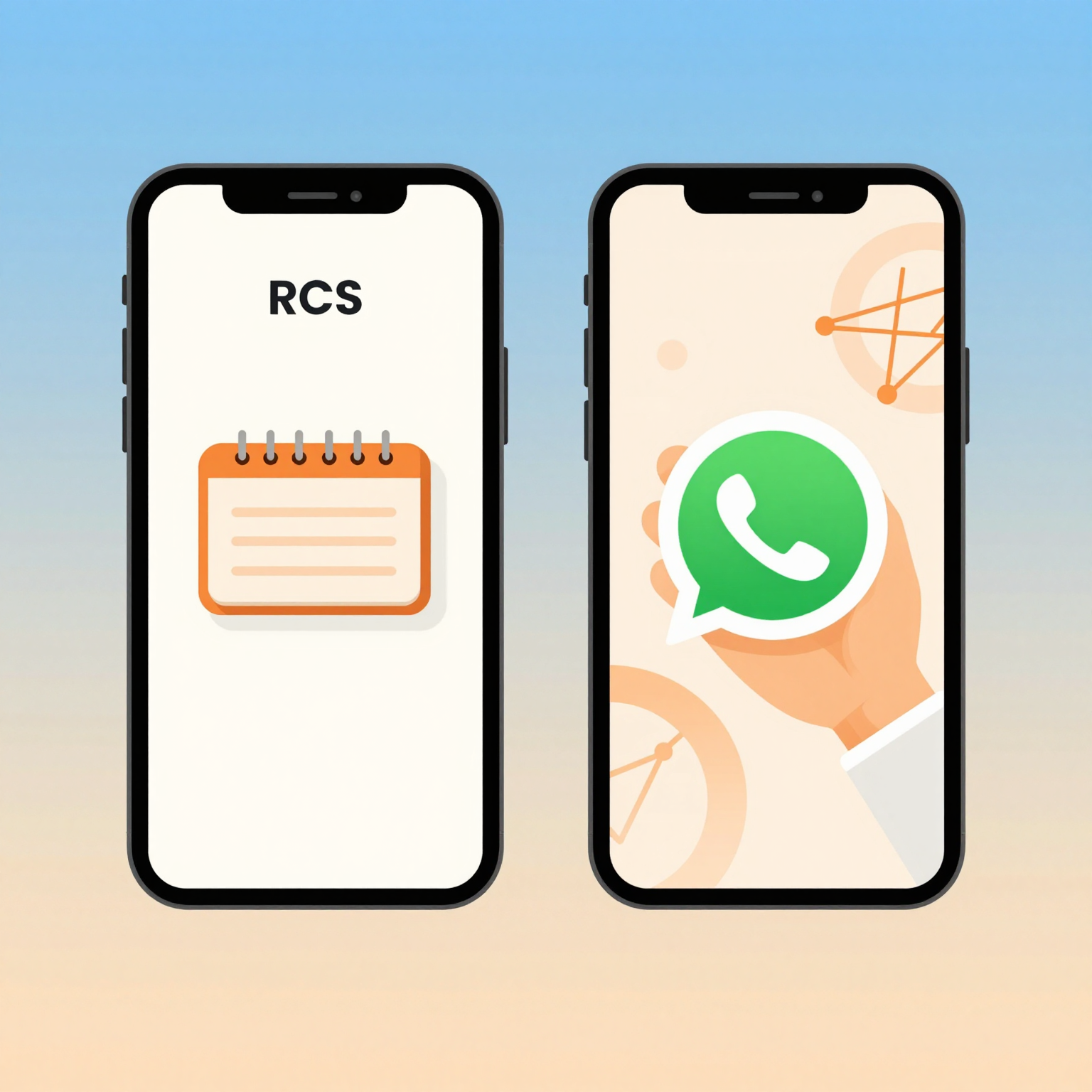
RCS vs WhatsApp: Best Messaging Options for Reach and Convenience
Side-by-Side Comparison: Where RCS Wins (No App Needed) and WhatsApp Wins (Reach) – Offer Both Services for Optimal Messaging

Estimated reading time: 5 minutes
Key Takeaways

- RCS wins with app-free convenience, directly integrating with native messaging apps.
- WhatsApp leads with a massive global reach, boasting over 2 billion users.
- Both platforms provide rich feature sets that cater to different communication needs.
- Offering both RCS and WhatsApp maximizes message deliverability and user engagement.
- Understanding user preferences is crucial for a successful messaging strategy.
Table of Contents
- Introduction
- Why Comparing RCS and WhatsApp Matters: Trends and User Behavior
- RCS vs. WhatsApp: Feature-by-Feature Comparison
- Real Examples and Case Studies Across Industries
- How to Implement Both RCS and WhatsApp Messaging: Step-by-Step Guide
- Benefits and Actionable Tips to Boost Messaging Success
- Future Trends: What To Expect in Messaging Services
- Conclusion
- FAQ
Introduction

In today’s digital age, communication is evolving rapidly. Businesses and individuals alike seek messaging platforms that are reliable, rich in features, and reach the widest audience possible. The choice between RCS (Rich Communication Services) and WhatsApp has become pivotal, especially when considering which service best meets diverse communication needs. This article presents a side-by-side comparison table highlighting where RCS wins with its app-free convenience and where WhatsApp dominates in terms of global reach and security. Whether you’re a marketer, small business owner, or tech enthusiast, understanding these differences ensures you make informed decisions—and why offering both services is the best strategy moving forward.
With nearly 2.5 billion smartphone users in India alone and billions worldwide, selecting the right messaging platform can dramatically improve engagement, customer satisfaction, and operational efficiency.
Why Comparing RCS and WhatsApp Matters: Trends and User Behavior

The messaging landscape is shifting as mobile users demand richer, faster, and more secure communication options. According to recent statistics, messaging app usage worldwide is projected to reach over 3.4 billion users by 2025. While WhatsApp remains the dominant platform globally with over 2 billion users, RCS is gaining traction especially across Android phone users who want enhanced messaging without downloading third-party apps.
Businesses face challenges such as:
- Reaching users across different devices and platforms
- Balancing security with ease of use
- Managing costs tied to messaging services
Both RCS and WhatsApp serve unique market demands. RCS’s integration with native messaging apps removes barriers seen with app downloads—ideal for quick, seamless communication. Meanwhile, WhatsApp’s ubiquity and end-to-end encryption make it indispensable for global, secure conversations.
RCS vs. WhatsApp: Feature-by-Feature Comparison
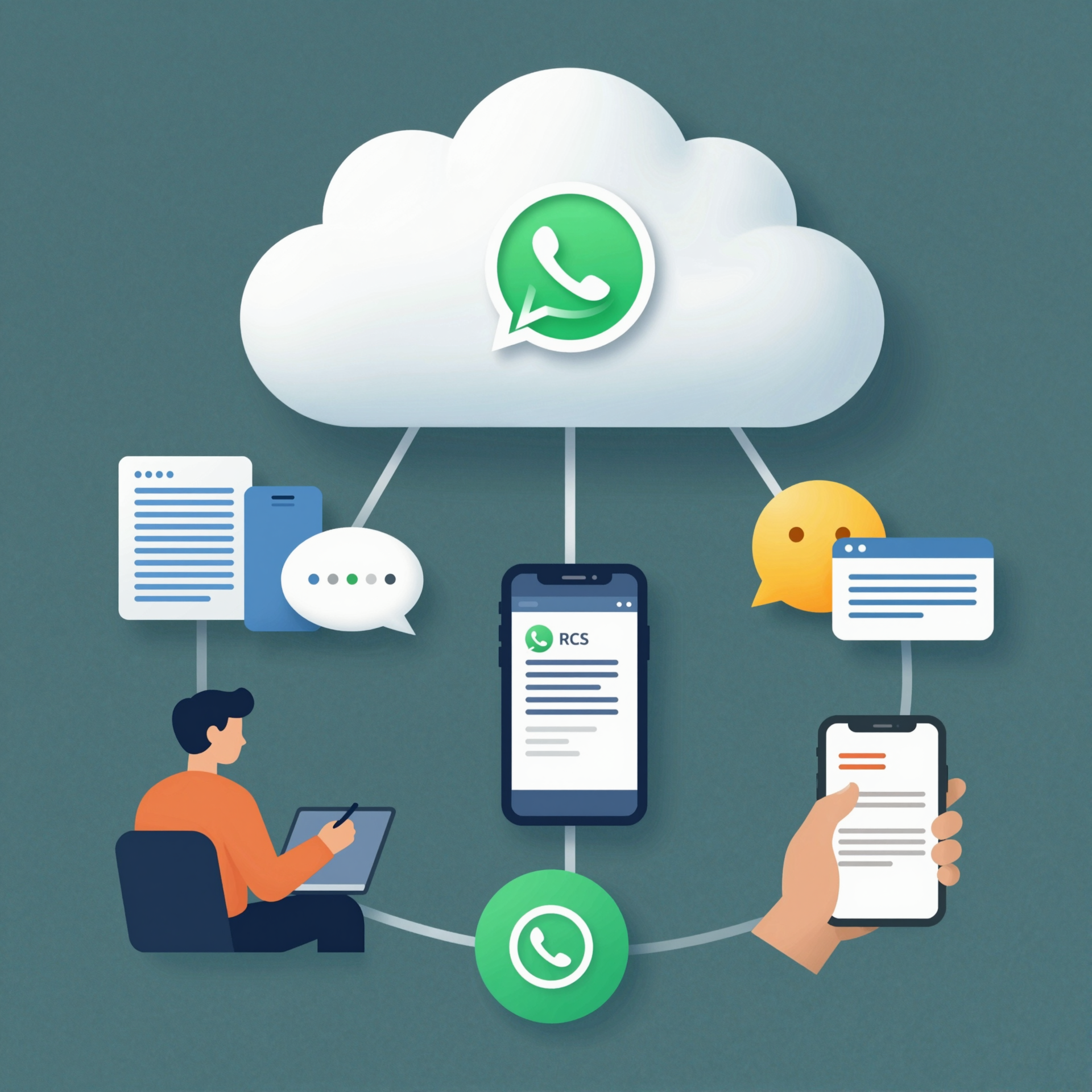
Here’s a detailed side-by-side comparison table highlighting where RCS wins by requiring no app installation and WhatsApp wins with its massive reach and encryption features:
| Feature | RCS (Rich Communication Services) | |
|---|---|---|
| App Requirement | No app needed — works directly through default messaging app | Requires WhatsApp app installed |
| Reach (User Base) | Limited by carrier and phone compatibility | Massive global user base (2+ billion users) |
| Message Types | Text, images, videos, group chat, read receipts | Text, images, videos, voice messages, group chat, read receipts |
| Internet Needed | Uses mobile data or Wi-Fi | Uses internet (Wi-Fi or mobile data) |
| Security / Encryption | Typically lacks end-to-end encryption | End-to-end encrypted by default |
| Platform Compatibility | Android phones primarily, supported by some carriers | Android, iOS, web, desktop |
| Cost to Sender/Receiver | Usually included in messaging plan (carrier charges may apply) | Requires internet data, free messaging |
| Integration | Integrated with phone’s native texting experience | Standalone app ecosystem |
Where RCS Excels
- No additional app installation: RCS uses the phone’s native messaging app, simplifying adoption.
- Rich media support: Allows texts, images, video, group chats, and more.
- Improved delivery and read receipts: Brings modern messaging features to the default SMS experience.
- Cost-effective: Usually operates on your existing mobile plan, with potential carrier charges.
Where WhatsApp Leads
- Massive global reach: Over 2 billion active users worldwide.
- Strong security: End-to-end encryption provides unparalleled user privacy.
- Cross-platform: Works on Android, iPhone, desktop, and web.
- Free messaging: Uses internet data without SMS charges.
- Rich features: Includes voice messages, video calls, and extensive app ecosystem integrations.
Real Examples and Case Studies Across Industries
Retail & E-commerce
A leading Indian retailer integrated RCS to send order confirmations and delivery updates through native SMS apps. Customers appreciated no need for additional app installs and rich media updates (images of product status). Simultaneously, WhatsApp was used for customer support chat due to its familiarity and encryption, increasing trust.
Healthcare
Hospitals use WhatsApp to provide appointment reminders and consult patients securely via end-to-end encrypted chats. For quick alerts or follow-ups, RCS messages were preferred, enhancing patient engagement without app barriers.
Finance
Banks leverage WhatsApp Business API for secure transaction alerts and two-way customer support. RCS is used for mass notifications where app download is a hurdle, especially in areas with limited smartphone variety.
Hospitality & Travel
Travel companies send booking confirmations via RCS to Android users, while promptly responding to inquiries via WhatsApp’s robust ecosystem. Combining both ensures no customer is missed.
How to Implement Both RCS and WhatsApp Messaging: Step-by-Step Guide
To maximize your communication impact, combine RCS and WhatsApp messaging capabilities with this practical approach:
- Assess your customer base: Identify device types, preferred platforms, and regional user tendencies.
- Integrate RCS for Android users: Enable RCS through your messaging service provider or carrier partnerships to reach users without requiring app downloads.
- Deploy WhatsApp Business: Register and configure WhatsApp Business API for global reach and customer support.
- Segment your campaigns: Use RCS for transactional messages, delivery updates, and light promotional content; utilize WhatsApp for secure conversations and multimedia marketing.
- Monitor analytics: Track delivery rates, open rates, and response times across both platforms to optimize messaging strategy.
- Ensure compliance: Follow carrier guidelines for RCS and WhatsApp’s business policies to maintain optimal message acceptance.
- Educate your team: Train marketing and support staff to understand benefits and limitations of both platforms for better customer interaction.
- Continuously update workflows: Refine your approach based on user feedback and platform updates.
Benefits and Actionable Tips to Boost Messaging Success
- Boost engagement: Combining RCS’s native integration with WhatsApp’s vast ecosystem ensures no user is left unreachable.
- Reduce friction: RCS removes app installation barriers, providing frictionless interaction especially for transactional messages.
- Leverage encryption: Use WhatsApp for sensitive conversations requiring privacy assurance.
- Lower costs: Utilize RCS messaging plans to minimize SMS charges where applicable.
- Personalize communication: Both platforms support multimedia content—use it to visually engage customers.
- Stay updated: Messaging technology evolves continuously; keep your strategy flexible.
Future Trends: What To Expect in Messaging Services
The future will see:
- Expanded RCS adoption: More carriers and devices will support RCS, especially in emerging markets.
- Enhanced security for RCS: Efforts are underway to bring end-to-end encryption to RCS, closing WhatsApp’s advantage gap.
- Greater integration: Messaging platforms will increasingly support commerce, payments, and AI-driven interactions.
- Multi-platform unification: Expect seamless stitching of conversations across apps and devices, offering personalized experiences.
Businesses combining RCS and WhatsApp today position themselves well to adapt to these advances swiftly.
Conclusion
Choosing between RCS and WhatsApp is no longer a simple either/or decision. The side-by-side comparison table clearly shows that RCS wins in the convenience of requiring no app and seamless native experience—perfect for Android users—while WhatsApp wins with its massive global reach and strong encryption, serving a broader audience including iOS users. The strongest strategy is to offer both services.
Implementing both platforms enables businesses to maximize message deliverability, improve customer satisfaction, and future-proof their messaging infrastructure. Whether sending quick transactional alerts or secure, interactive chats, leveraging the unique strengths of both RCS and WhatsApp is the way forward.
Contact us today to discover how integrating RCS and WhatsApp messaging can revolutionize your communication and customer engagement.
FAQ
Currently, RCS is primarily supported on Android devices and selectively by carriers. iPhones use iMessage or apps like WhatsApp.
Q2: Is WhatsApp business messaging free?
WhatsApp requires an internet connection but messaging itself is free. Businesses may incur costs for using the WhatsApp Business API.
Q3: Can RCS messages be encrypted?
RCS lacks default end-to-end encryption today, but encryption is expected to improve with ongoing developments.
Q4: How to enable RCS messaging?
RCS is enabled through carriers and messaging service providers. Many Android phones have native support in the default messaging app.
Q5: Can I use both RCS and WhatsApp simultaneously?
Yes, using both offers the most comprehensive reach and engagement, each complementing the other’s strengths.
[Related post: How to Leverage Messaging Platforms for Business Growth]
[1]: Statista
[2]: Sensor Tower
[3]: GSMA
[4]: WhatsApp
[5]: TechRadar
Recent Blog

Build a Multi-Vendor Marketplace for Startup Success
Build Your Own Multi-Vendor Marketplace Like Amazon: A Startup’s Guide…

How AI Chatbots Improve Customer Support and Sales
How AI Chatbots Improve Customer Support & Sales: Unlocking the…

10 Signs Your SME Needs Custom Software Now
10 Signs Your Business Needs a Custom Software Solution Estimated…