:
:  :
:  CUBICLES CODERS PVT LTD
Why API-First Development is Key for Modern Backend Services
API-First Development: Why APIs Are Becoming Essential for Modern Backend Services
Estimated reading time: 6 minutes
Key Takeaways

- APIs are fundamental for enabling connectivity and integration in diverse industries.
- API-First Development enhances scalability and reusability through modular design.
- Implementing API-first principles can accelerate development cycles and foster innovation.
- APIs serve as secure interfaces between client applications and backend services.
- Emerging trends like GraphQL and AI-driven automation are shaping the future of API development.
Table of Contents

Introduction
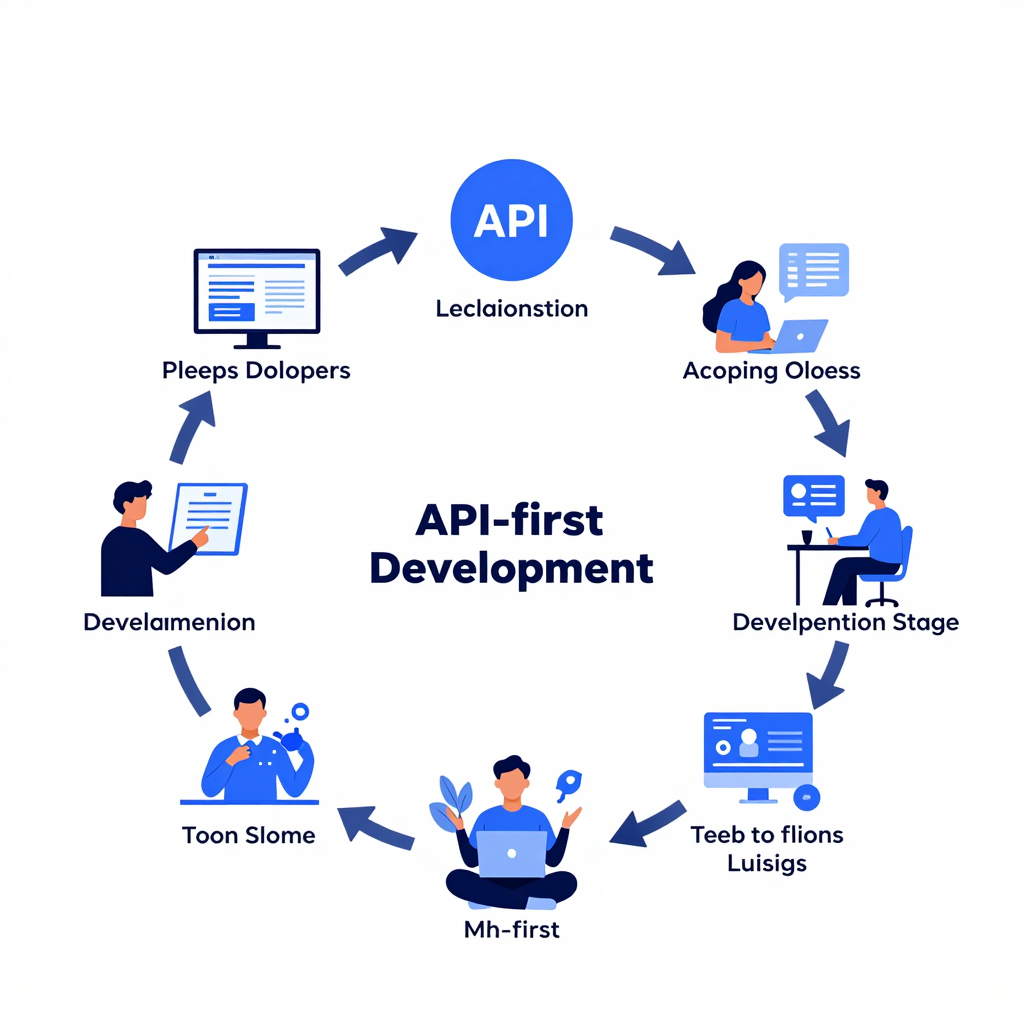
In today’s rapidly evolving digital landscape, API-First Development is not just a buzzword—it’s becoming a foundational approach for building scalable, flexible, and efficient backend services. But why exactly are APIs becoming essential in nearly every industry? Whether you’re developing applications in tech, healthcare, finance, or lifestyle sectors, APIs play a pivotal role by connecting diverse systems, enabling automation, and accelerating innovation.
API-First Development prioritizes designing APIs upfront before crafting user interfaces or frontend applications, ensuring seamless integration and consistent communication between services. This strategy is particularly relevant in India’s booming tech scene and globally, where businesses aim to speed up development cycles and foster connectivity across platforms.
In this article, we’ll explore why APIs have become indispensable, highlight the tangible benefits they offer, and explain their critical relevance to backend services. Whether you’re a developer, business owner, or IT leader, understanding API-first principles is key to unlocking your project’s full potential.
Why APIs Are Becoming Essential

APIs (Application Programming Interfaces) have evolved as the backbone of modern software architecture for several compelling reasons:
- Ubiquitous Connectivity
In a world full of databases, third-party platforms, mobile apps, web portals, and IoT devices, APIs standardize communication, enabling disparate systems to work together effortlessly. - Microservices Architecture
Modern applications are increasingly adopting microservices, dividing backend functions into independent, modular services. APIs form the communication channels between these microservices, enhancing scalability and maintenance. - Cross-Platform User Experiences
APIs allow the same backend logic to serve multiple platforms—mobile apps, web browsers, desktops, and even wearables—providing a consistent user experience everywhere. - Faster Development Cycles
Clear API contracts let frontend and backend teams work in parallel, drastically reducing time to market for new features and products. - Third-Party Ecosystem Expansion
By exposing APIs externally, companies create thriving ecosystems where partners and developers build integrations, plugins, or new functionalities, driving innovation beyond internal capabilities.
In fact, industry reports show that over 83% of organizations are planning to increase API investments to enable digital transformation in the next two years.
Benefits of APIs
Understanding the benefits of APIs helps explain why the API-first approach is increasingly popular:
- Modularity and Reusability
APIs encapsulate business logic and services, which can be reused across multiple applications, reducing redundant development effort. - Consistency and Standardization
Designing APIs first promotes standardized interfaces and data formats, improving developer productivity and reducing bugs caused by miscommunication. - Scalability
APIs decouple client applications from backend logic, enabling independent scaling of either side based on load or growth. - Security
APIs serve as controlled gateways, implementing strong authentication, authorization, and monitoring mechanisms to protect backend data and services. - Faster Innovation
APIs allow teams to work on different components simultaneously, speeding up prototyping, testing, and iteration cycles. - Automation
From continuous integration pipelines to data synchronization, APIs enable seamless automation across tools and platforms. - Better Documentation and Collaboration
API-first workflows typically generate detailed documentation (e.g., OpenAPI/Swagger), aligning developers, testers, and business stakeholders effectively.
Relevance to Backend Services
APIs are central to modern backend services, performing multiple critical roles:
- Backend as a Service Layer
APIs expose backend logic such as data processing and business rules to client applications, abstracting complexity. - Integration Hub
Backend APIs connect internal databases with external services like payment gateways, analytics tools, or third-party data sources—forming the application’s nervous system. - Maintainable Architecture
Versioned APIs allow backend teams to update or refactor logic without disrupting client integrations, supporting continuous delivery. - Performance Optimization
Backend APIs can be tailored for specific use cases—bulk data exports, fine-grained queries, or caching layers—improving responsiveness. - Security Gateway
Rate limiting, logging, and access controls at the API layer protect critical backend resources from abuse or attacks. - Monitoring and Analytics
APIs provide visibility into application usage, performance bottlenecks, and user behavior, feeding useful operational insights.
Step-by-Step Guide to Implement API-First Development
Want to adopt API-first development in your backend services? Here’s a practical 6-step approach:
- Define API Requirements and Consumer Needs
Interview stakeholders and developers to understand what clients will consume the API and their expectations. - Design the API Contract
Use tools like OpenAPI Specification to design clear, versioned API blueprints including endpoints, request/response schema, and error codes. - Review and Iterate
Collaborate with frontend teams, QA, and business analysts to validate the API design before implementation. - Implement Backend Logic
Build your backend services according to the API contract, ensuring loose coupling and modularity. - Automate Testing and Documentation
Automatically generate API documentation and implement automated integration tests against the API. - Version and Maintain
Deploy APIs with version control, ensuring backward compatibility while iterating on features and performance.
Following this roadmap helps you deliver well-structured, reliable APIs that accelerate your overall development lifecycle.
Future Trends in API-First Development
The future of APIs and API-first development is bright, influenced by several emerging trends:
- GraphQL and Beyond
Alternatives to REST like GraphQL offer more flexible querying capabilities, making APIs more efficient and developer-friendly. - API Security Advancements
With growing cybersecurity threats, advanced authentication methods (OAuth 2.1, JWT) and zero-trust models will dominate API security. - API-Driven Automation and AI
APIs will enable AI-powered automation of workflows and predictive analytics, creating smarter backend services. - Event-Driven APIs
Real-time APIs and webhooks will support event-driven architectures, improving responsiveness in distributed systems. - API Marketplaces and Monetization
Companies will increasingly monetize their APIs through managed marketplaces, creating new revenue channels.
Keeping pace with these trends ensures your APIs remain modern, robust, and competitive.
FAQ
What is API-first development?
API-first development is an approach where the API is designed and documented before the implementation of the frontend or backend, ensuring all integrations and consumers have a consistent interface.
Why are APIs important for backend services?
APIs act as the interface layer, enabling secure, scalable, and maintainable communication between backend logic and frontend or external clients.
How does API-first improve software development?
API-first enables parallel development, better documentation, and greater consistency, which lead to faster, more reliable software delivery.
What are common tools for API-first design?
Popular tools include Swagger/OpenAPI, Postman, and API management platforms such as Apigee and Kong.
Can API-first work with microservices?
Yes, API-first is ideally suited for microservices-based architectures because services communicate via well-defined APIs.
Conclusion
In a world where connectivity, speed, and security are paramount, API-First Development stands out as a strategic approach to creating scalable, maintainable backend services. APIs have become essential to enable cross-platform experiences, faster development, and robust integrations across industries worldwide, including in fast-growing markets like India.
By prioritizing APIs early in the development lifecycle, teams can reap numerous benefits—modularity, standardization, security, and innovation—while future-proofing their applications with flexible, performance-optimized backend services.
Ready to harness the full potential of API-first development? Contact us today! We can help your team design, document, and implement APIs that elevate your backend services to the next level.
Recent Blog

Build a Multi-Vendor Marketplace for Startup Success
Build Your Own Multi-Vendor Marketplace Like Amazon: A Startup’s Guide…

How AI Chatbots Improve Customer Support and Sales
How AI Chatbots Improve Customer Support & Sales: Unlocking the…

10 Signs Your SME Needs Custom Software Now
10 Signs Your Business Needs a Custom Software Solution Estimated…