:
:  :
:  CUBICLES CODERS PVT LTD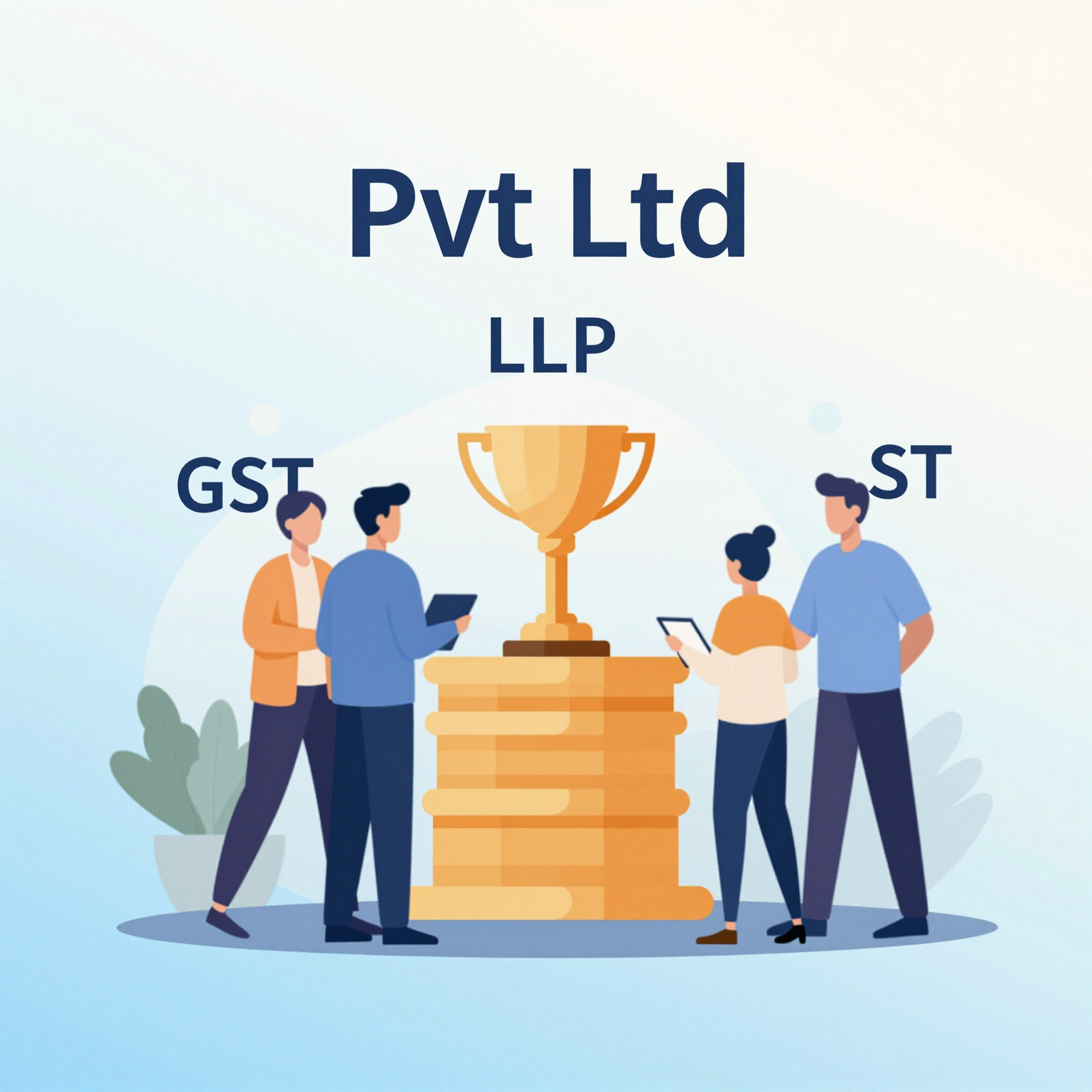
Comprehensive Guide to Pvt Ltd, LLP, OPC, GST, and Trademark for Business Success
A Comprehensive Guide on Pvt Ltd, LLP, OPC, GST, and Trademark for Business Success

Estimated reading time: 12 minutes
Key Takeaways

- Understanding the legal structure is crucial for business operations.
- Pvt Ltd companies offer limited liability and easier access to funding.
- LLPs provide flexibility in management with reduced compliance.
- OPCs are ideal for solo entrepreneurs, granting limited liability.
- GST and trademark protection enhance business credibility and operational efficiency.
Table of Contents

Introduction
Starting and running a successful business requires a deep understanding of the right legal structure and compliance framework. Whether you are an entrepreneur launching a startup or an established business owner planning expansion, the choice between a Pvt Ltd company, LLP, or OPC, along with GST registration and trademark protection, determines your operational efficiency and legal safety. These terms — Pvt Ltd, LLP, OPC, GST, and trademark — are not just jargon but fundamental pillars that sustain Indian businesses in today’s competitive market.
This pillar content aims to provide a thorough overview of these concepts, explaining their features, advantages, registration procedures, and compliance essentials. The goal is to create an evergreen resource that attracts monthly traffic by answering your key questions and guiding you step-by-step, making it easier to navigate the complex corporate and regulatory environment in India. Understanding these concepts is crucial because over 90% of businesses in India prefer specific structures based on liability protection, funding capabilities, and taxation benefits. Additionally, GST and trademark laws help streamline operations and protect intangible assets, respectively.
By the end of this guide, you will be equipped with crucial insights and practical steps to make the best decisions for your business’s legal setup, tax compliance, and brand protection. Let’s dive into the pillars supporting your business’s foundation and growth.
Private Limited Company (Pvt Ltd): Definition, Advantages, and Procedure

A Private Limited Company (Pvt Ltd) remains one of the most preferred business structures for Indian entrepreneurs due to its limited liability and growth flexibility. It is ideal for startups seeking private equity funding, firms requiring separate legal status, and businesses with moderate to high growth ambitions.
Key Features of Pvt Ltd Company
- Limited liability shields shareholders’ personal assets.
- Separate legal identity distinct from shareholders.
- Minimum 2 and maximum 200 members allowed.
- Transfer of shares is restricted to maintain control.
- Mandatory compliance includes annual financial audits and filings.
Advantages of Pvt Ltd Company
- Easier access to venture capital and private equity investments.
- Separate legal status ensures continuity despite ownership changes.
- Credibility boost in market and industry reputation.
- Ability to enter into contracts and own property in the company name.
How to Register a Pvt Ltd Company
- Obtain Digital Signature Certificate (DSC) for proposed directors.
- Acquire Director Identification Number (DIN).
- Apply for company name approval through Ministry of Corporate Affairs (MCA).
- Prepare and file incorporation documents including Memorandum of Association (MoA) and Articles of Association (AoA) with Registrar of Companies (ROC).
- Receive the Certificate of Incorporation confirming legal existence.
Timely compliance and maintaining statutory registers are mandatory post-registration for hassle-free operations.
Limited Liability Partnership (LLP): Flexible and Cost-Effective Business Model
A Limited Liability Partnership (LLP) is a blend of the flexibility found in partnerships and the limited liability of companies. It suits professionals and businesses desiring less compliance burden but with legal protection for partners.
Key Features of LLP
- Separate legal entity distinct from its partners.
- No limit on number of partners.
- Partners’ liability limited to agreed capital contributions.
- Flexible management structure without fixed board formalities.
Benefits of LLP
- Reduced compliance compared to Pvt Ltd Companies.
- No minimum capital requirement.
- Tax pass-through structure: profits are taxed only at partner level.
- Ideal for professional services like law firms, consultancies.
LLP Registration Process
- Obtain DSC and DIN for designated partners.
- Apply for name approval from ROC.
- Draft and execute an LLP agreement outlining roles and capital contributions.
- File incorporation forms with MCA.
- Receive the LLP certificate of incorporation.
The LLP structure is becoming increasingly popular with startups and SMEs for ease of operation and growth.
One Person Company (OPC): Business Structure for Solo Entrepreneurs
An One Person Company (OPC) caters to solo entrepreneurs who want to enjoy the benefits of a company structure without partners while restraining liability.
Features of OPC
- Single shareholder and director allowed.
- Limited liability protection on shareholder’s investment.
- Separate legal entity providing distinct business identity.
- Easy conversion into Private Limited Company as business grows.
Advantages of OPC
- Complete control with one shareholder.
- Simplified compliance norms and reporting.
- Perpetual succession ensures business continuity.
- Suitable for solopreneurs with growth vision.
How to Form an OPC
- Obtain DSC and DIN.
- Apply for a unique name for approval.
- File incorporation documents with required declarations.
- Submit forms to Registrar of Companies.
- Obtain Certificate of Incorporation to start operations legally.
OPC is an excellent pathway for individual proprietors looking to scale with a corporate framework.
Goods and Services Tax (GST): Understanding India’s Indirect Tax Regime
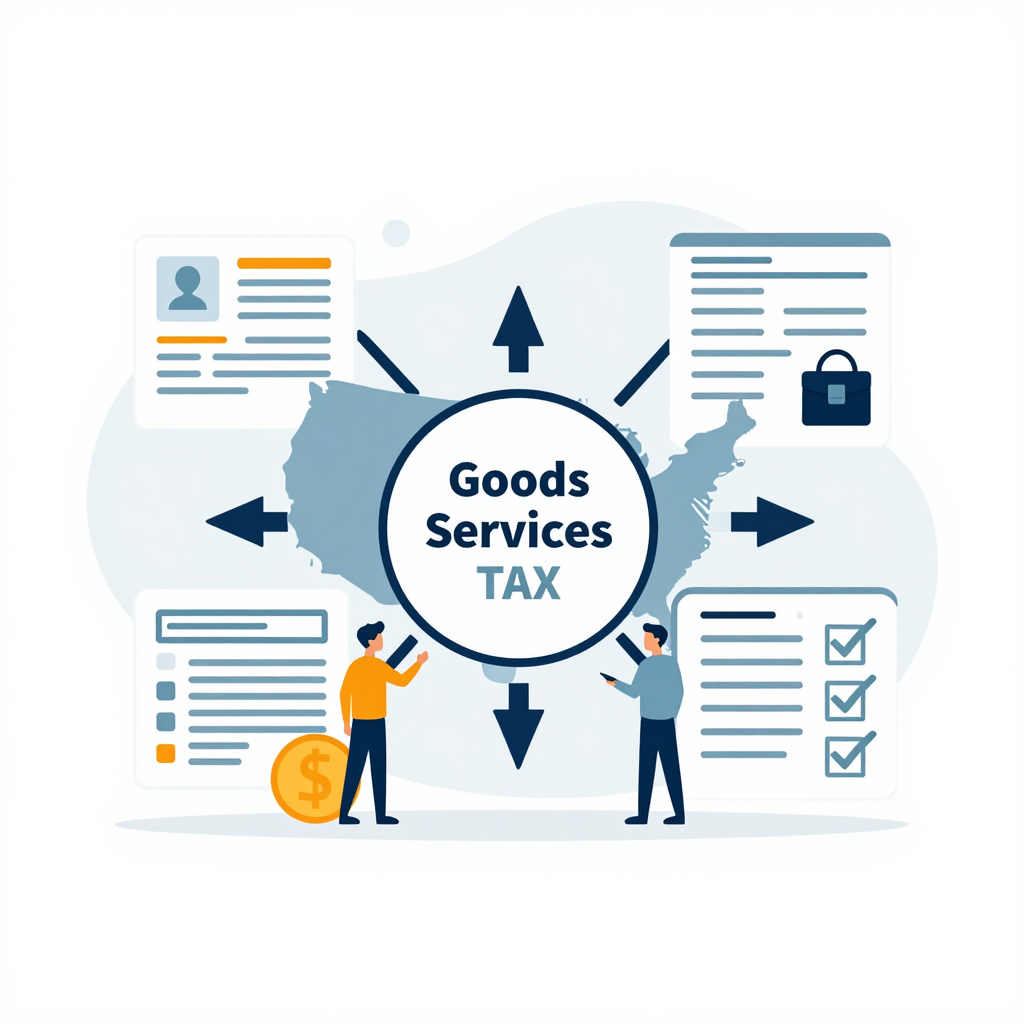
The Goods and Services Tax (GST) has revolutionized the Indian taxation landscape by subsuming multiple indirect taxes under a single umbrella, facilitating seamless movement of goods across states and simplifying compliance.
Importance of GST for Businesses
- Streamlines various state and central taxes into one uniform tax.
- Eliminates cascading tax effects ensuring cost reduction.
- Enhances the ease of doing business in India.
- Mandatory registration for businesses exceeding a specified turnover threshold.
Key GST Components
| Component | Description | Applicability |
|---|---|---|
| CGST | Central Government GST | Intra-state supply |
| SGST | State Government GST | Intra-state supply |
| IGST | Integrated GST for inter-state transactions | Inter-state supply of goods & services |
GST Registration Steps
- Identify if your business requires mandatory or voluntary GST registration.
- Apply online through the official GST portal.
- Verification of application followed by issuance of GST Identification Number (GSTIN).
GST Compliance Essentials
- Filing monthly or quarterly GST returns.
- Maintaining proper tax invoices as per GST rules.
- Timely remittance of GST dues to avoid penalties.
GST compliance is crucial to avoid disruptions and maintain business credibility.
Trademark: Protecting Brand Identity and Intellectual Property
Brand identity is one of your most valuable business assets. A trademark uniquely distinguishes your products or services in the marketplace and offers legal protection against unauthorized use.
Importance of Trademark for Businesses
- Grants exclusive rights over brand representation.
- Builds strong brand loyalty and customer recognition.
- Protects against counterfeit and brand infringement.
- Enhances business valuation as an intangible asset.
Types of Trademarks
- Word Marks (brand names)
- Logo Marks (graphic symbols)
- Combination Marks (word + logo)
- Sound Marks (unique audio identifiers)
Trademark Registration Process
- Conduct a thorough trademark search to ensure uniqueness.
- File the application with the Trademark Registry.
- Undergo examination, including checks for objections or oppositions.
- Upon successful scrutiny, trademark is published and registration is granted.
Maintaining Trademark Rights
- Renew trademark every 10 years to maintain legal protection.
- Monitor and enforce rights vigilantly against infringement.
Trademark registration not only protects but also uplifts your brand’s market position sustainably.
Conclusion
Choosing the right business entity—whether a Pvt Ltd company, LLP, or OPC—is essential to align your operational goals and legal needs effectively. Coupled with mandatory GST registration and proactive trademark protection, these elements form a robust foundation for business growth and compliance in India. Whether you are just starting or expanding, understanding these pillars equips you with essential tools to stay competitive, compliant, and secure in today’s evolving market landscape.
Contact us today to get expert assistance in registering your business, GST compliance, or trademark protection. Secure your business future with informed decisions and professional guidance.
FAQ
What is the main difference between Pvt Ltd and LLP?
A: Pvt Ltd offers easier funding options and higher compliance, whereas LLP provides operational flexibility with limited liability and lower compliance.
Can an OPC be converted into a Pvt Ltd company?
A: Yes, an OPC can convert into Pvt Ltd if its paid-up capital exceeds Rs. 50 lakhs or turnover exceeds Rs. 2 crores.
Is GST registration mandatory for all businesses?
A: No, GST registration is mandatory if turnover exceeds the prescribed threshold (Rs. 40 lakhs for goods suppliers, Rs. 20 lakhs for services in most states).
How long does trademark registration take in India?
A: Trademark registration can take anywhere between 12 to 18 months depending on objections and opposition processes.
Are LLP profits taxed at the entity level?
A: No, LLP profits are taxed at the partner level only, making it a pass-through entity.
Recent Blog

Why AI Automation is Essential for Business Growth in 2026
Why Every Business Needs AI Automation in 2026: Unlocking Growth…

Digital Transformation in 2026: Key Strategies for Success
The Complete Guide to Digital Transformation in 2026: Why It…

Building Future-Ready Applications with Emerging Technologies
Building Future-Ready Applications with Emerging Technologies: A Roadmap for Innovation…