:
:  :
:  CUBICLES CODERS PVT LTD
Why Multi-Cloud is Essential for AI Scalability
The Necessity of Multi-Cloud for AI Scalability: Unlocking Flexibility and Performance
Estimated reading time: 6 minutes
Key Takeaways
- Multi-cloud strategies offer unmatched flexibility and resource optimization.
- Adoption reduces vendor lock-in and enhances compliance with data sovereignty laws.
- Multi-cloud fosters innovation by leveraging diverse AI ecosystems.
- Real-world examples illustrate successful multi-cloud implementations across various industries.
- Organizations must continuously optimize for performance and cost efficiency.
Table of Contents
Introduction
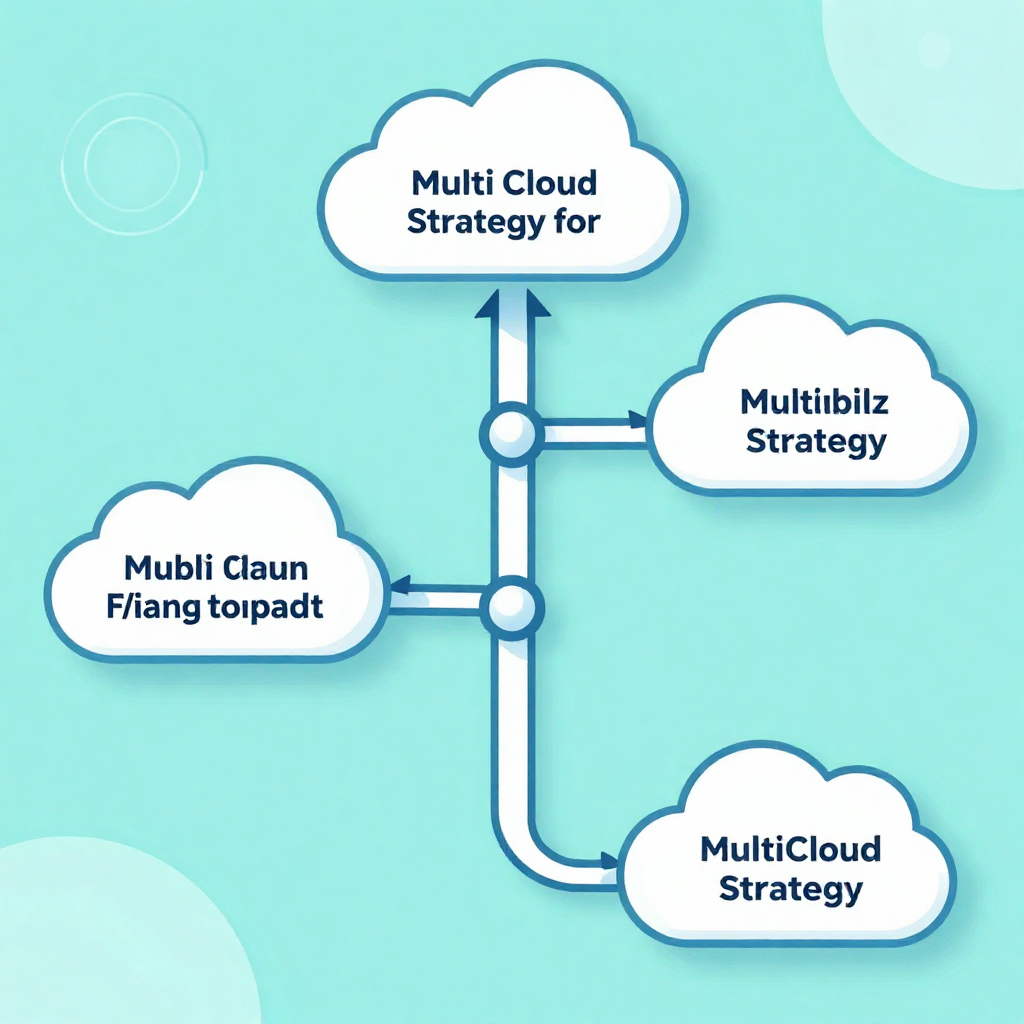
In today’s rapidly evolving technology landscape, the necessity of multi-cloud for AI scalability has become a pivotal strategy for organizations worldwide. Whether you operate a startup in Bangalore, a healthcare provider in New York, or a multinational enterprise, scaling artificial intelligence (AI) demands more than just raw computing power — it requires agility, cost efficiency, and compliance on a global scale.
AI applications rely heavily on diverse and extensive computational resources such as GPUs and TPUs. Yet, no single cloud vendor delivers the perfect hardware or the most cost-effective pricing for every AI workload. This is where multi-cloud architectures come into play, offering a way to select the best tools and infrastructure across multiple cloud environments.
As AI adopters worldwide aim to boost performance, avoid vendor lock-in, and meet regulatory requirements, a multi-cloud framework paves the way for scalable, resilient, and innovative AI deployments. This article explores why multi-cloud adoption is essential to AI scalability, illustrating its practical benefits, challenges, and future potential.
The Problem: Why Single-Cloud Falls Short for AI Scalability
Organizations investing in AI quickly realize that relying on a single cloud provider can create significant limitations:
- Resource Constraints: Large-scale AI training requires specialized hardware (GPUs, TPUs) and massive compute power that no one provider can optimize fully.
- Vendor Lock-in: Tying AI workflows to a single vendor’s platform can restrict access to the best AI frameworks, delay innovation, and create costly migration barriers.
- Compliance Risks: Different countries enforce varying data sovereignty laws, requiring data to remain within specific borders.
- Reliability Concerns: Downtime in a single cloud environment can jeopardize mission-critical AI applications, leading to lost revenue and trust.
- Cost Variability: AI workloads are resource-heavy and expensive. Relying on one vendor often means missing out on competitive pricing.
Recent studies show that 61% of enterprises adopting AI prefer multi-cloud environments for achieving operational flexibility and better cost management[^source1]. Clearly, the limitations of single-cloud adoption are driving a strategic shift toward multi-cloud models.
How Multi-Cloud Enables AI Scalability: Key Insights
Implementing a multi-cloud strategy addresses these AI challenges head-on. Here’s how it works:
| Factor | Multi-Cloud Advantage |
|---|---|
| Resource Optimization | Choose specific AI-optimized hardware across vendors. |
| Innovation | Access diverse AI tools, APIs, and frameworks simultaneously. |
| Compliance | Distribute data to meet local laws and reduce legal risk. |
| Reliability | High availability through synchronized multi-cloud backups. |
| Cost Efficiency | Leverage competitive pricing via workload distribution. |
Resource Optimization and Flexibility
AI projects have varied compute needs. Training deep neural networks may demand Google Cloud TPUs, while inference workloads could run more economically on AWS GPUs. Multi-cloud usage empowers teams to allocate resources optimally per task.
Avoiding Vendor Lock-in
No cloud platform offers all AI tools equally. For example, Microsoft Azure’s Cognitive Services may complement AWS’s SageMaker capabilities. Multi-cloud prevents dependency on one vendor and encourages diverse innovation.
Data Sovereignty and Compliance
Global AI initiatives must comply with GDPR in Europe or India’s data localization laws. Multi-cloud supports this by allowing regional data processing where needed.
Disaster Recovery and High Availability
If one cloud suffers failure, workloads can failover seamlessly to another, maintaining continuous AI service availability.
Innovation through Diverse AI Ecosystems
Providers differ in specialty AI APIs — vision, natural language processing, translation, and more. Multi-cloud enables tapping into the strongest ecosystem for each AI domain.
Cost Efficiency and Competitive Pricing
Dynamic workload allocation helps organizations avoid inflated costs by switching workloads to the most cost-effective cloud in real-time.
Real-World Examples of Multi-Cloud for AI Scalability
- Healthcare: Mayo Clinic – Mayo Clinic uses multi-cloud to process medical imaging data with AI models. By distributing workloads between AWS and Google Cloud, they optimize computing costs and comply with strict HIPAA regulations.
- Retail: Walmart – Walmart leverages AI for inventory management and customer insights by combining Microsoft Azure’s AI tools with Google Cloud’s analytics platform, enabling rapid AI scaling to handle peak traffic.
- Finance: JPMorgan Chase – JPMorgan Chase employs a multi-cloud strategy for fraud detection AI systems, ensuring data governance across regions and maintaining high availability during trading hours.
- Automotive: Toyota – Toyota develops autonomous vehicle AI by utilizing AWS for model training and Azure for edge deployment, achieving resource flexibility and regulatory compliance simultaneously.
- Technology Providers: Netflix – Netflix’s AI recommendation system takes advantage of multi-cloud to balance load and reduce latency globally, ensuring a seamless viewing experience.
These diverse examples show how multi-cloud not only supports scalability but also drives innovation and compliance across sectors.
Step-by-Step Guide to Implementing Multi-Cloud for AI
- Assess AI Workloads: Identify AI models’ compute, storage, and latency requirements.
- Select Cloud Providers: Choose providers based on specialized hardware, AI services, and compliance capabilities.
- Design Flexible Architecture: Deploy AI components modularly to enable workload portability.
- Implement Data Management: Use distributed data lakes and pipelines respecting local data laws.
- Develop Monitoring & Automation: Automate workload balancing with AI resource monitoring tools.
- Train Teams and Develop Skills: Upskill teams to manage multiple cloud environments efficiently.
- Establish Security & Governance Policies: Design multi-cloud security frameworks to manage risks.
- Continuously Optimize Costs and Performance: Use analytics to fine-tune cloud usage patterns dynamically.
Following these actionable steps sets a strong foundation for scalable AI across clouds.
Benefits and Tips for Effective Multi-Cloud AI Scalability
- Maximize Performance: Match workloads to clouds with best-fit AI accelerators.
- Mitigate Risks: Spread AI critical workloads to reduce downtime risks.
- Enhance Compliance: Use regional clouds to meet legal requirements.
- Cost Control: Leverage price competitions and negotiate volume discounts.
- Foster Innovation: Combine AI tools from different providers for richer capabilities.
- Ensure Scalability: Plan for seamless workload migration as AI demands grow.
Tips:
- Prioritize interoperability by using containerization and open AI frameworks.
- Monitor and analyze cloud costs regularly to prevent budget overruns.
- Maintain documentation of multi-cloud architectures to ensure smooth collaboration.
Future Trends in Multi-Cloud AI Scalability
Looking ahead, multi-cloud adoption for AI will continue evolving, shaped by:
- Edge AI Integration: Closer integration of edge clouds will enhance low-latency AI use cases.
- AI-Driven Cloud Management: Automated AI will optimize workload placement and cost in real-time across clouds.
- Stronger Open Standards: Initiatives like Kubernetes and ONNX will boost multi-cloud portability of AI models.
- Increased Regulatory Complexity: Organizations will rely more on multi-cloud to adapt to shifting global data laws.
- Hybrid AI Solutions: Combining private and public clouds will become mainstream to balance performance and control.
These trends underscore that multi-cloud strategies are not just a choice but a necessity for scalable, innovative AI-driven enterprises.
Conclusion
The necessity of multi-cloud for AI scalability is clear: it delivers unmatched flexibility, performance optimization, compliance support, disaster resilience, and innovation potential. As AI workloads grow more complex and critical, organizations must embrace multi-cloud to unlock true scalability while managing cost and risk effectively.
Are you ready to leverage the power of multi-cloud for your AI initiatives? Contact us today! Our experts can guide you through designing and implementing a multi-cloud AI strategy tailored to your unique needs.
FAQ
Q1: What is multi-cloud in AI scalability?
A: Multi-cloud means using multiple cloud providers simultaneously to run, train, and deploy AI applications, enabling flexibility and resilience.
Q2: Why can’t AI be run on a single cloud?
A: Single clouds may lack optimal hardware, tools, or compliance capabilities needed for diverse AI workloads.
Q3: How does multi-cloud reduce vendor lock-in?
A: It allows using best-of-breed AI services from different providers without being dependent on one.
Q4: Is multi-cloud more expensive?
A: Initially, it requires investment, but long-term costs reduce due to competitive pricing and optimized resource usage.
Q5: How does multi-cloud help with data compliance?
A: It facilitates region-specific data storage and processing to meet local regulatory requirements.
[Related post: How AI is Transforming Cloud Computing]
[^source1]: Gartner, “Why Multi-Cloud is Key for AI Success,” 2023
[^source2]: Forbes, “The Benefits of Multi-Cloud for AI Scalability,” 2024
[^source3]: IDC, “AI Workload Management with Multi-Cloud Systems,” 2023
[^source4]: McKinsey, “Strategic AI Development Across Clouds,” 2024
Recent Blog

Build a Multi-Vendor Marketplace for Startup Success
Build Your Own Multi-Vendor Marketplace Like Amazon: A Startup’s Guide…

How AI Chatbots Improve Customer Support and Sales
How AI Chatbots Improve Customer Support & Sales: Unlocking the…
10 Signs Your SME Needs Custom Software Now
10 Signs Your Business Needs a Custom Software Solution Estimated…