:
:  :
:  CUBICLES CODERS PVT LTD
Expressing Intent in AI Development for Smarter Systems
Move Away from “Coding” to “Expressing Intent” in AI Development: The Future of Building Smarter Systems
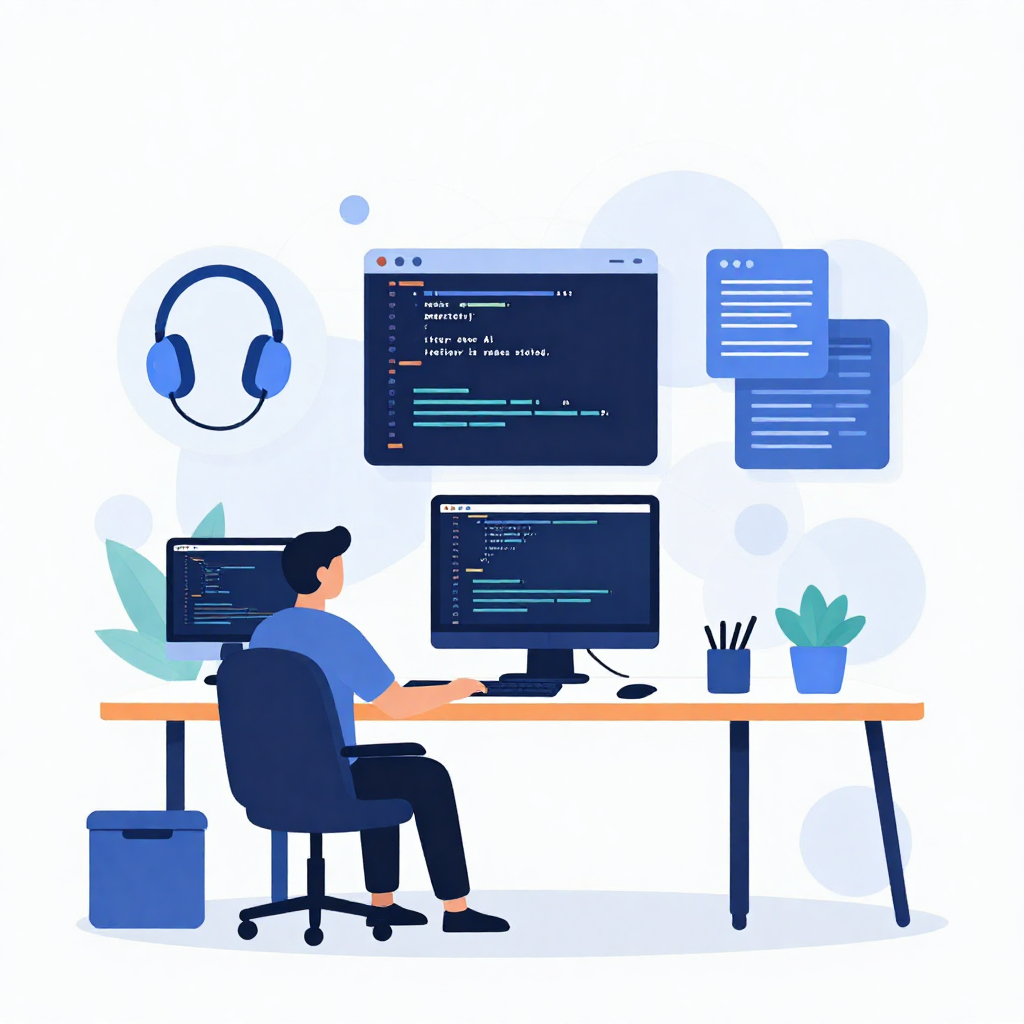
Estimated reading time: 8 minutes
Key Takeaways
- The shift from coding to expressing intent democratizes AI development.
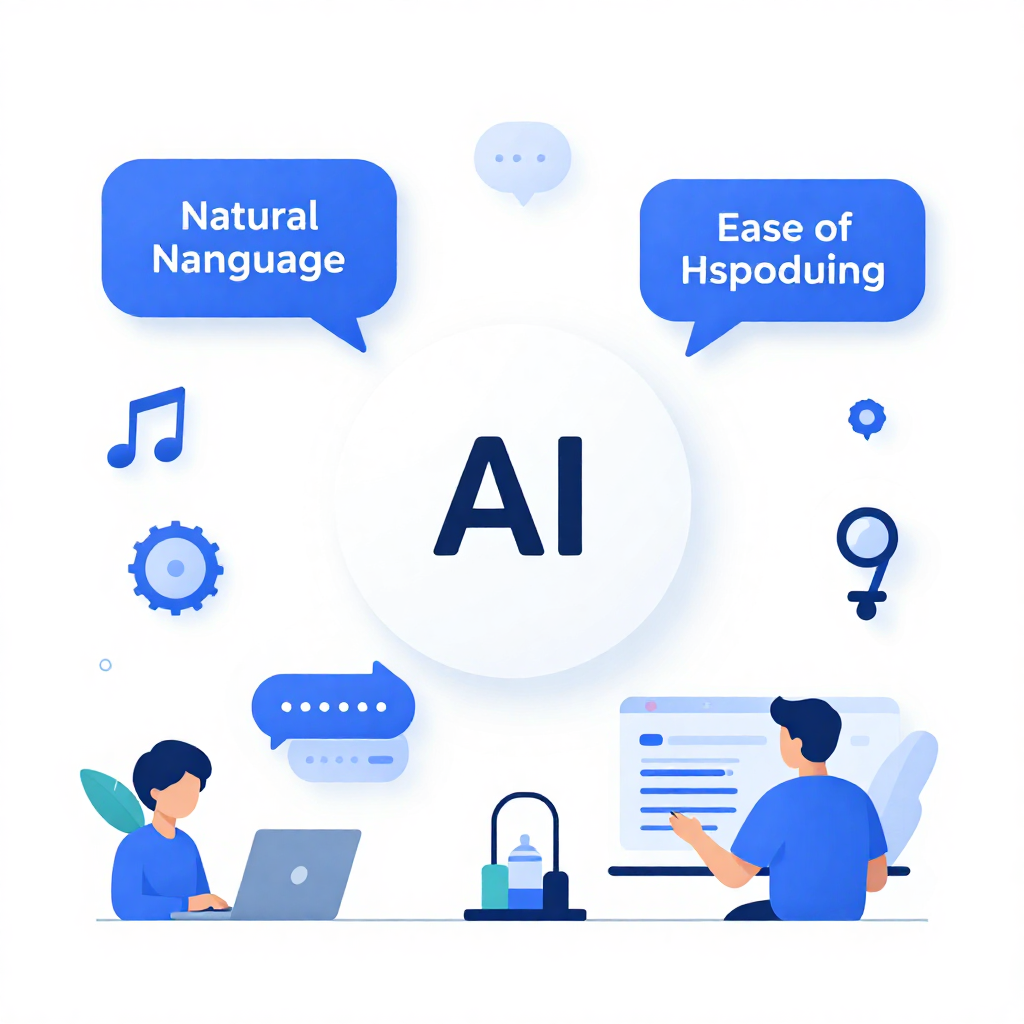
- Natural language interfaces and low-code platforms enhance accessibility.
- Expressing intent fosters rapid prototyping and development speed.
- Collaboration between technical and non-technical users is crucial.
- Future trends include more sophisticated LLMs and domain-specific intent languages.
Table of Contents
Introduction
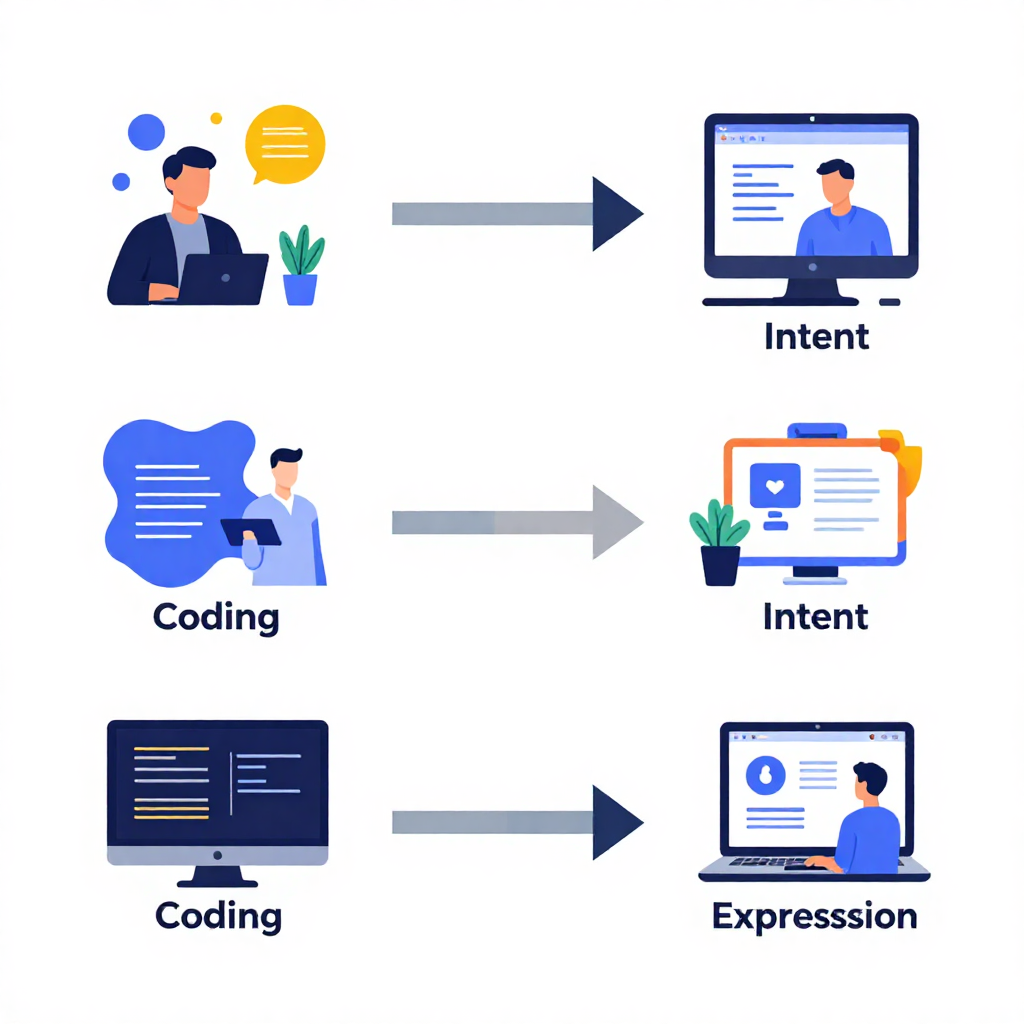
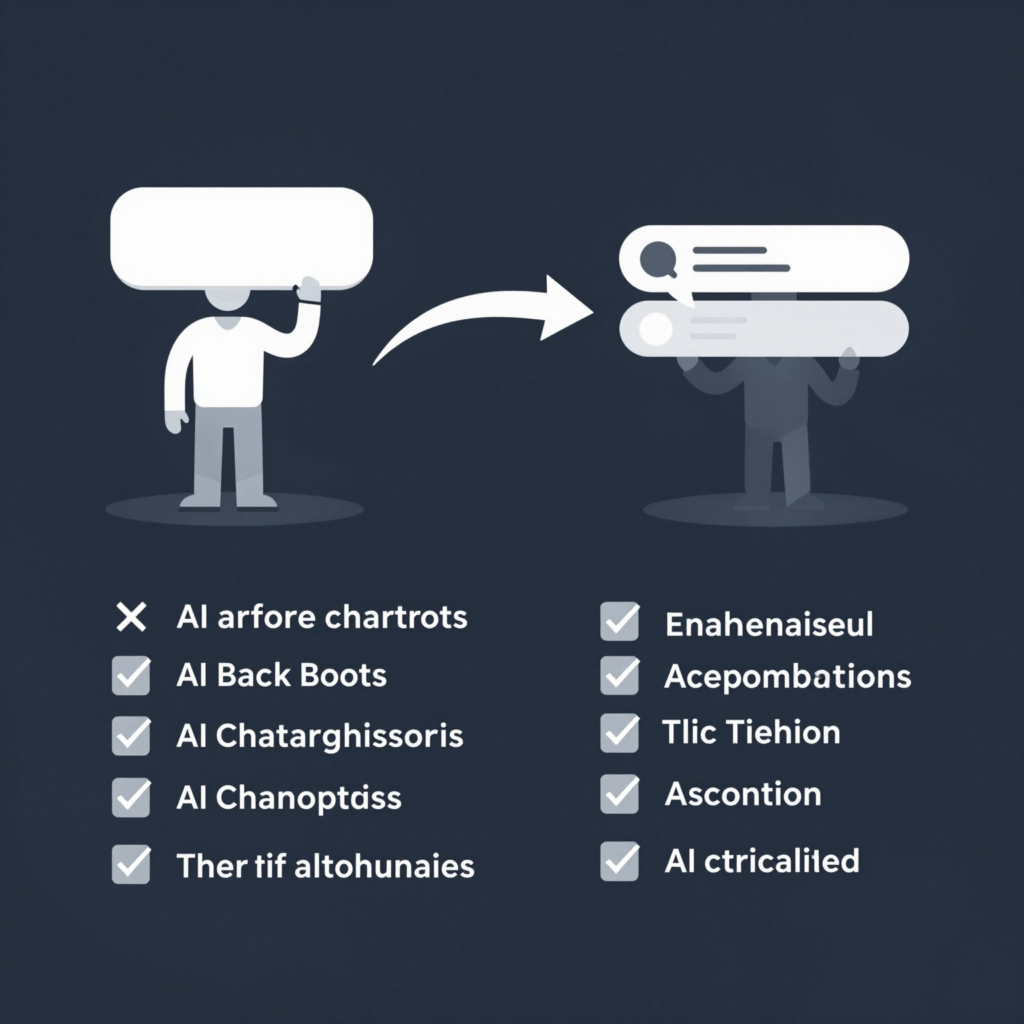
In the fast-evolving landscape of artificial intelligence, a profound transformation is underway. We are witnessing a shift from the traditional mindset of coding—writing detailed, step-by-step instructions in programming languages—to expressing intent, where developers or even non-experts communicate what they want an AI system to achieve instead of how to do it. This change is more than semantic; it marks a fundamental rethinking of how AI systems are created and interacted with.
Why does this matter? Because expressing intent in AI development can democratize building intelligent applications, enabling domain experts, business leaders, and even casual users from India to Silicon Valley to design AI workflows without deep technical skills. This approach accelerates innovation, reduces errors, and leads to systems that better align with human goals.
This article explores what it means to move away from coding to expressing intent in AI development, the technologies making this possible, real-world examples, the benefits and challenges, and what the future holds for this paradigm shift.
Why the Shift from Coding to Expressing Intent Is a Game-Changer
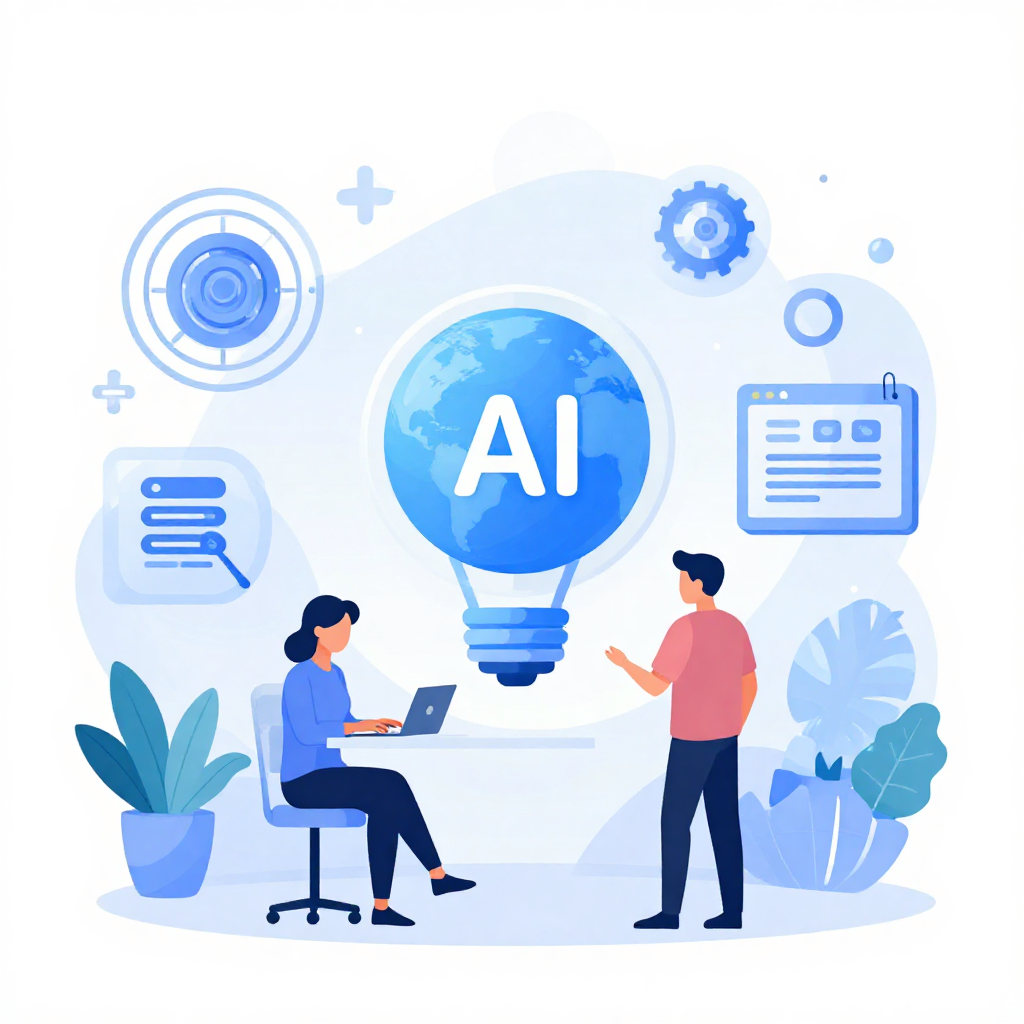
The traditional software development model relies heavily on coding skills—writing explicit instructions in languages like Python, Java, or C++. But this process is often complex, time-consuming, and limited to those with specialized knowledge. Moreover, the traditional approach sometimes creates a gap between stakeholders who understand the problem and developers who write the code.
Expressing intent turns these limitations on their heads. Instead of specifying how to reach a goal, you describe the goal itself. This subtle but powerful change opens the door for innovative AI building methods that are accessible to many more people.
What Does “Expressing Intent” Mean?
At its core, expressing intent refers to communicating high-level objectives or constraints—usually in natural language or abstract form—that an AI system interprets and implements. For example, instead of coding a function that filters emails, you might say, “Filter out all promotional emails.” The AI uses this intent to generate appropriate logic.
How It Differs from Traditional Coding
| Aspect | Traditional Coding | Expressing Intent |
|---|---|---|
| Approach | Write detailed algorithms and instructions | Specify desired outcomes and goals |
| Required Skills | Programming languages and frameworks | Domain knowledge and clear expression |
| Flexibility | Low; modifications require code changes | High; update intent without recoding |
| Accessibility | Limited to developers | Open to non-technical stakeholders |
| Development Speed | Slower due to debugging and refinement | Faster prototyping and iteration |
This simple comparison highlights why moving toward intent expression can transform AI development across sectors.
Technologies Enabling the Shift to Expressing Intent
Several technological advances are converging to make intent-driven AI development not only possible but practical:
- Large Language Models (LLMs): Models like GPT-4 can process natural language instructions and generate code snippets or configurations that fulfill those directives. This bridges human intent and executable programs efficiently.
- Declarative Programming: Languages and frameworks that emphasize what to do rather than how promote expressing intent. Examples include SQL queries or infrastructure-as-code tools like Terraform.
- Low-code/No-code Platforms: Visual, drag-and-drop interfaces empower users with minimal coding skills to design AI workflows guided by intent.
- Natural Language Interfaces: Voice assistants and chatbots capture user intent in familiar formats, turning commands into system actions.
Real-World Examples of Expressing Intent in AI
- Healthcare Diagnostics: Doctors specify symptoms and desired outcomes (“Notify me of any anomalies in patient scans indicating tumors”). AI platforms interpret these intents, building models without direct programming.
- Financial Services: Investment managers express risk appetite and goals (“Prioritize investments with moderate risk and high ESG scores”). AI systems generate portfolio strategies aligned with this intent.
- Customer Support Automation: Companies use chatbots that respond to natural language phrases (“Help customers reset their passwords quickly”) instead of coding exhaustive dialogue trees.
- Manufacturing: Engineers set production intents such as “Optimize assembly line throughput with minimal downtime,” and AI systems deduce and implement logistics and control changes.
- Education Technology: Teachers input desired learning outcomes (“Provide exercises that improve algebraic reasoning”), and AI adapts curricula accordingly.
These examples demonstrate the power of moving from technical coding to higher-level intent expression, making AI development inclusive and efficient.
Step-by-Step Guide to Moving Toward Expressing Intent in AI Development
- Identify the High-Level Goal: Start with a clear statement of what you want to achieve, stated simply and accessibly.
- Choose an Appropriate Platform: Select tools that support natural language interfaces, declarative programming, or low-code/no-code models.
- Express the Intent: Use plain language or visual models to describe your objectives, constraints, and expected outcomes.
- Leverage AI Interpretation: Utilize LLMs or intent-processing engines to translate your expressed intent into executable code or workflows.
- Validate and Refine: Test outputs and adjust your intent to better capture nuances or changes in requirements.
- Iterate Rapidly: Use feedback loops to evolve AI behaviors without heavy recoding.
- Involve Stakeholders: Encourage collaboration between technical and non-technical team members by aligning on intent.
- Monitor and Verify: Ensure AI behaviors match intended goals for safety and reliability.
Benefits of Moving Toward Intent Expression
- Democratizes AI Creation: Enables participation from non-coders, domain experts, and business users.
- Accelerates Development: Rapid translation of ideas to working models, cutting time-to-market dramatically.
- Increases Flexibility: AI solutions can adapt dynamically as intentions evolve without rewriting code.
- Improves Alignment: Focusing on the ‘why’ encourages systems that reflect human values and objectives.
- Reduces Errors: Less chance of bugs caused by manual coding mistakes.
- Enhances Collaboration: Bridges communication gaps between developers and stakeholders.
Challenges and How to Overcome Them
While promising, moving to an intent-driven approach poses hurdles:
- Ambiguity in Expression: Natural language can be vague. Address this with guided interfaces, templates, or validation prompts.
- Interpretability: Systems must explain how they derived solutions from an intent to build trust.
- Complex Control Needs: Some tasks require granular control not easily captured by abstract inputs; hybrid approaches may be necessary.
- Verification and Safety: Thorough testing and governance ensure AI aligns with critical safety standards.
Investing in research and refinement is essential to handle these challenges as the field matures.
Future Trends in Intent-Driven AI Development
Looking ahead, several trends will accelerate this paradigm shift:
- More Sophisticated LLMs: Future models will better understand and reason about human intent in complex domains.
- Hybrid Approaches: Combining declarative models with intent along with traditional coding for hybrid control.
- Enhanced Natural Language Programming: Empowering users to “code” entirely through conversational AI.
- Domain-Specific Intent Languages: Tailored for industries like healthcare or finance for precise expression and compliance.
- Expanded Low-code/No-code Ecosystems: Making AI creation ubiquitous across company departments and in everyday applications.
- Integration with IoT and Edge Devices: Meaning users express intent that directly affects hardware and sensors dynamically.
This evolution promises a democratized, agile AI landscape.
Conclusion
Shifting from traditional coding to expressing intent in AI development is more than a trend—it’s a strategic advantage that reshapes who can build AI and how quickly they can innovate. By focusing on what the system should accomplish rather than how to program it, organizations worldwide—from startups in Bangalore to enterprises in Mumbai—can create smarter, more aligned AI solutions faster.
The key lies in embracing new AI technologies like LLMs, declarative paradigms, and intuitive interfaces that empower a broader range of users. While challenges such as ambiguity and verification remain, continuous progress is making intent-driven AI an exciting, accessible frontier.
Ready to harness this transformative approach? Contact us today! Let’s move beyond coding to expressing intent and unlock your AI potential.
FAQ
What is the main difference between coding and expressing intent in AI?
Coding involves writing explicit instructions in programming languages, while expressing intent focuses on describing what the AI should achieve, letting the system figure out the how.
Can non-programmers participate in AI development through intent expression?
Yes! Expressing intent democratizes AI development by allowing domain experts and non-coders to contribute through natural language or intuitive interfaces.
What technologies support expressing intent?
Key enablers include Large Language Models (LLMs), declarative programming, low-code/no-code platforms, and natural language interfaces.
Are there any risks in using intent-driven AI?
Risks include ambiguity in communication, incorrect interpretation of intent, and challenges in verifying AI behavior—mitigated through validation and iterative testing.
How fast can AI development be with intent expression?
Development times can drop significantly—sometimes from weeks or months to days—due to quicker prototyping and less manual coding.
Recent Blog

Build a Multi-Vendor Marketplace for Startup Success
Build Your Own Multi-Vendor Marketplace Like Amazon: A Startup’s Guide…
How AI Chatbots Improve Customer Support and Sales
How AI Chatbots Improve Customer Support & Sales: Unlocking the…

10 Signs Your SME Needs Custom Software Now
10 Signs Your Business Needs a Custom Software Solution Estimated…