 :
:  :
: 


 CUBICLES CODERS PVT LTD
Understanding Cloud 3.0 and Data Sovereignty
Is Your Data Really Yours? Understanding the Shift to Cloud 3.0 with Cubicles & Coders
Estimated reading time: 9 minutes
Key Takeaways
- Cloud 3.0 offers decentralized, localized control of data, improving security and compliance.
- Traditional cloud models often expose organizations to increased risks related to ownership and data breaches.
- Implementing zero-trust security and hybrid on-premise/cloud setups are crucial in Cloud 3.0.
- Businesses can enhance operations and trust by adopting customized infrastructure solutions.
- Transitioning to Cloud 3.0 requires strategic planning, expert guidance, and gradual scaling.
Table of Contents
- Introduction
- The Rising Problem: Why Traditional Cloud Models Fall Short
- What is Cloud 3.0? Defining the Future of Data Storage and Management
- Real-World Examples: Cloud 3.0 in Action Across Industries
- Step-by-Step Guide: How to Transition to Cloud 3.0 Securely
- Benefits and Expert Tips for Maximizing Cloud 3.0 Success
- Future Trends: What Lies Ahead for Cloud 3.0 and Data Ownership
- Conclusion
- FAQ
Introduction
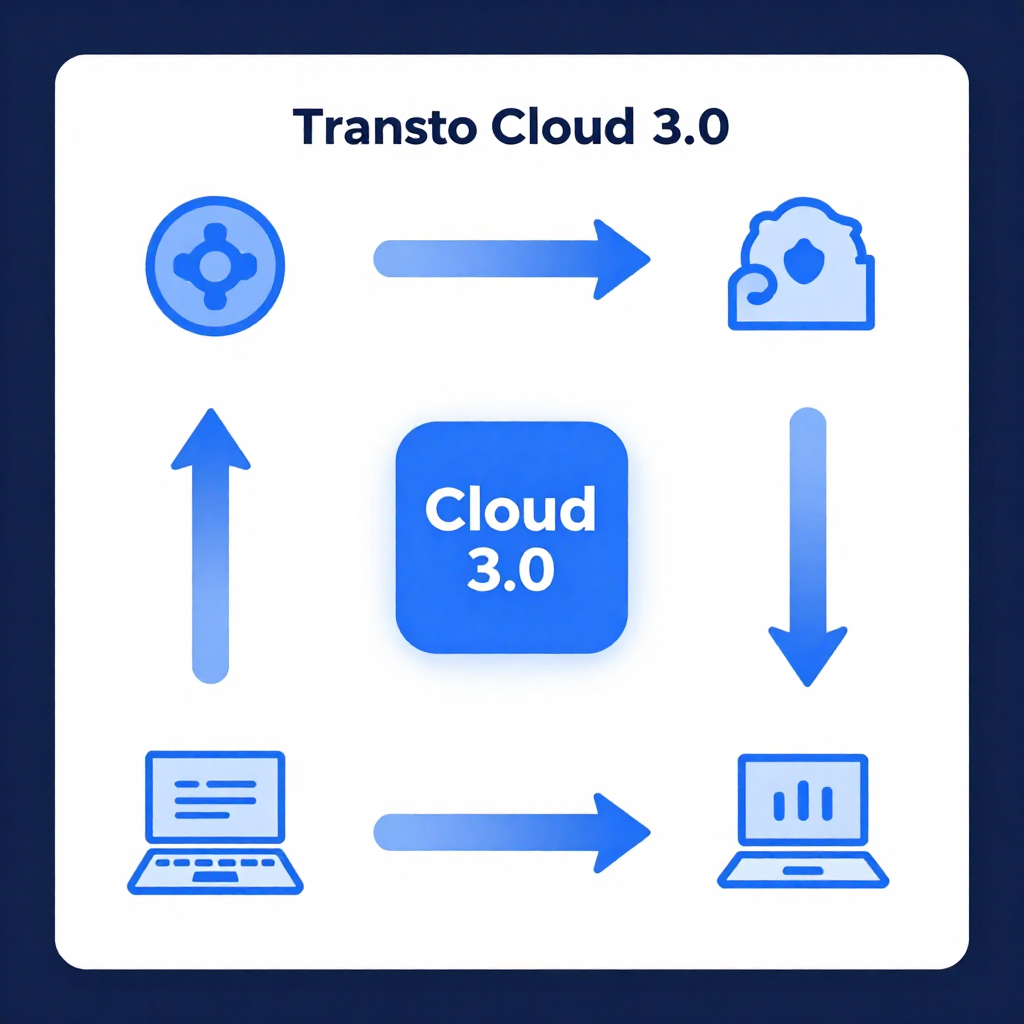
**Is your data really yours?** This question is more critical today than ever before. In a world where data breaches, privacy concerns, and regulatory scrutiny are increasing, businesses face mounting pressure to not only store data securely but also retain full ownership and control. Traditional cloud models, which often rely on centralized providers scattered across the globe, no longer guarantee true data sovereignty or the security demanded by modern enterprises.
Welcome to **Cloud 3.0** — the next chapter in cloud computing that transforms how organizations handle data. Unlike the earlier Cloud 1.0 and 2.0 models, Cloud 3.0 embraces decentralization, localization, and cutting-edge security practices to ensure your data stays precisely where you want it — under your control, compliant with local laws, and accessible with minimal latency.
This shift isn’t just a technological upgrade; it’s a paradigm shift in **data ownership and trust**. Whether you’re a healthcare provider in India subject to strict data localization laws, a fintech startup in Europe navigating GDPR, or a global enterprise aiming to optimize performance, Cloud 3.0 delivers a future-ready infrastructure that prioritizes your sovereignty and security.
In this article, we will explore what Cloud 3.0 is, why it matters, and how **Cubicles & Coders** stands at the forefront of building secure, localized cloud infrastructures. Read on to uncover why the answer to “Is your data really yours?” is finally a confident **YES**.
The Rising Problem: Why Traditional Cloud Models Fall Short
The rise of cloud computing revolutionized data management, but it has also introduced challenges that businesses can no longer ignore:
- Centralized Data Risks: Most cloud service providers operate globally dispersed, massive data centers with centralized control, which increases vulnerability to cyberattacks, insider threats, and data leaks.
- Data Sovereignty and Compliance: Laws such as GDPR (Europe), CCPA (California), and India’s proposed Personal Data Protection Act require strict data residency and processing guidelines. Centralized models struggle to guarantee compliance.
- Latency and Reliability Issues: When data and applications are hosted thousands of miles away, delays occur, jeopardizing time-sensitive applications like video conferencing or financial transactions.
- Opaque Ownership: Many businesses don’t have full visibility or physical control over their data, raising questions about who truly “owns” and governs the information.
**Statistics highlight this trend:** Cybersecurity Ventures predicts cybercrime damages will cost businesses $10.5 trillion annually by 2025, while 59% of organizations believe data compliance complexity is their biggest challenge (Cisco).
The era of treating data as a commodity stored vaguely “in the cloud” has ended. Businesses need solutions that put their **data sovereignty and security front and center**.
What is Cloud 3.0? Defining the Future of Data Storage and Management
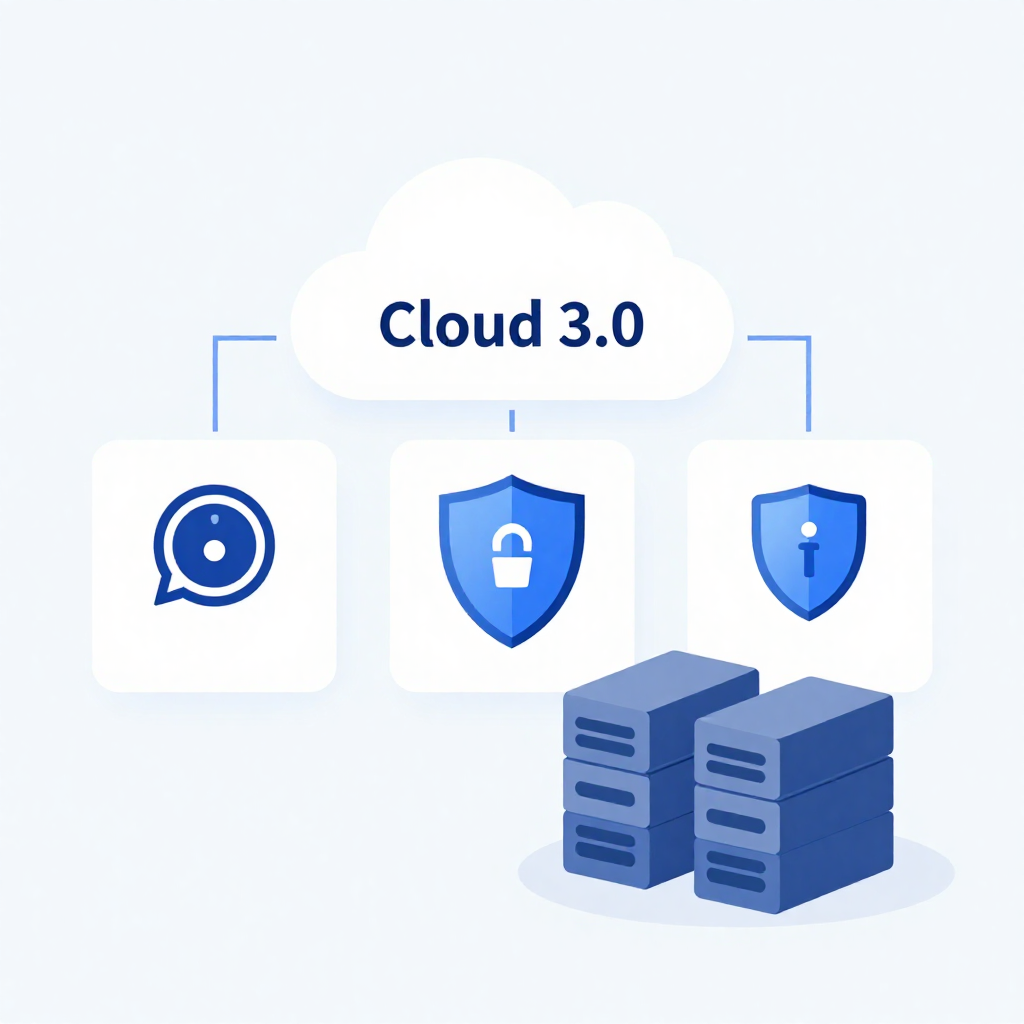
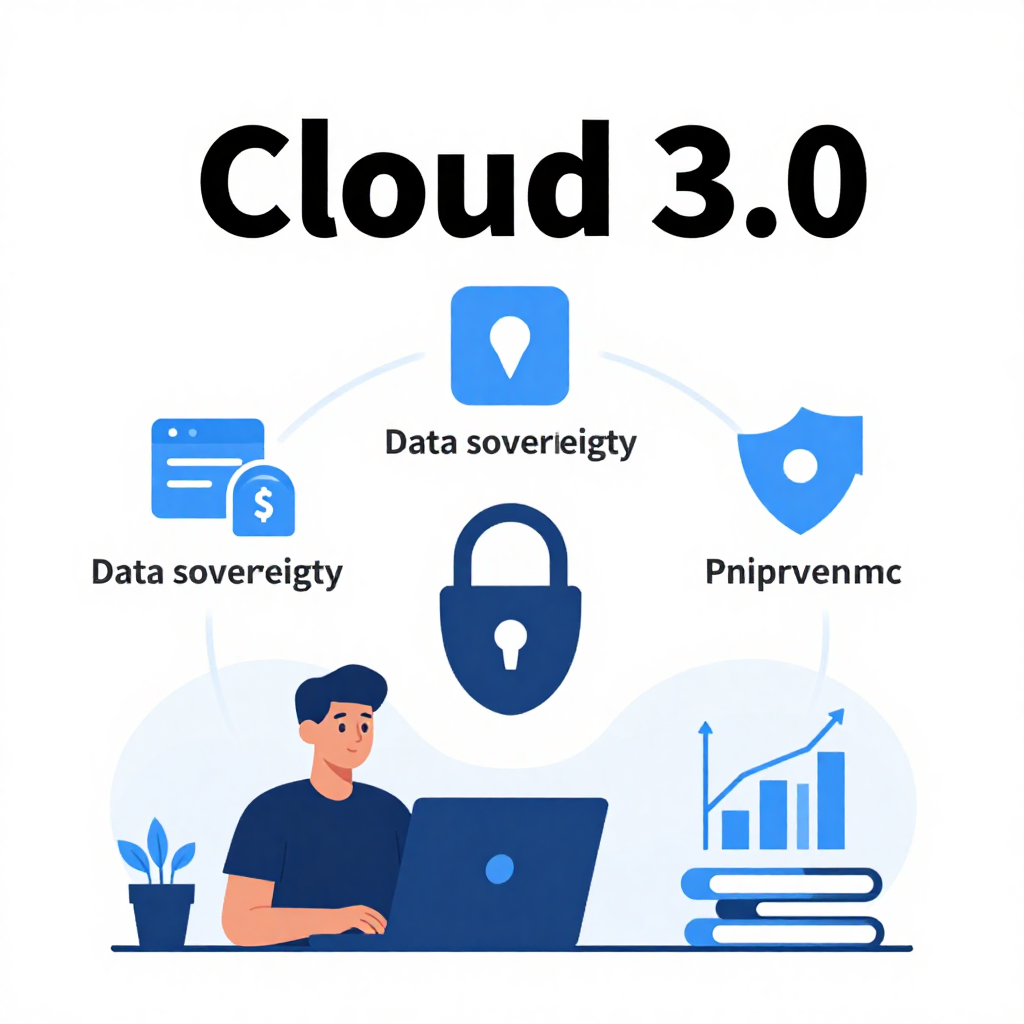
Cloud 3.0 moves beyond generic cloud services by integrating three fundamental principles:
1. True Data Sovereignty
Data physically resides on servers within regional boundaries, giving organizations legal ownership and control aligned with national and industry regulations.
2. Advanced Security Architectures
Zero-trust models coupled with end-to-end encryption prevent unauthorized access. Cloud 3.0 utilizes hybrid on-premise/cloud setups, allowing sensitive data to remain on-site while leveraging cloud scalability.
3. Scalability with Localization
Instead of a one-size-fits-all approach, Cloud 3.0 infrastructures adapt to specific business workflows, offering rapid scaling without sacrificing localized control and performance.
| Feature | Cloud 1.0 | Cloud 2.0 | Cloud 3.0 |
|---|---|---|---|
| Data Location | Centralized | Regional | Localized + On-premise Hybrid |
| Ownership | Provider-centric | Shared | Customer-controlled |
| Security Models | Perimeter-based | Identity & Access | Zero-trust + Encryption |
| Performance (Latency) | Variable | Improved | Minimal (Localized Access) |
| Compliance Suitability | Limited | Moderate | High (Custom Legal Alignment) |
The combination of these elements ensures that organizations regain full control with minimized risks — making **Cloud 3.0 the logical next evolution for secure, compliant cloud adoption.**
Real-World Examples: Cloud 3.0 in Action Across Industries
To grasp Cloud 3.0’s impact, consider these diverse case studies:
- Healthcare: A multinational hospital network deployed localized cloud nodes within country borders to comply with patient privacy laws. This enabled faster access to electronic health records while keeping data physically within legal jurisdictions.
- Finance: A regional bank embraced Cloud 3.0 infrastructure to implement zero-trust security and encrypted transactions on hybrid cloud/on-prem models. The result was regulatory compliance and reduced risk of data breaches.
- Manufacturing: An automotive supplier built a localized cloud environment for its factories, enabling real-time analytics and AI-powered predictive maintenance without latency delays.
- Education: A university adopted Cloud 3.0 to store student and research data on campus-controlled server nodes, balancing accessibility and strict data privacy requirements.
Each example highlights how a tailored, localized approach not only meets legal demands but also enhances operations and safeguards trust.
Step-by-Step Guide: How to Transition to Cloud 3.0 Securely
Shifting to Cloud 3.0 isn’t about dumping current systems; it’s a strategic, phased approach:
- Assess Current Cloud Infrastructure: Evaluate where your data currently resides and identify compliance gaps or security weaknesses.
- Define Data Ownership Requirements: Clarify data sovereignty laws applicable to your industry and geographies.
- Engage Experts for Design: Partner with trusted cloud architects—like Cubicles & Coders—who can design custom localized and hybrid cloud environments.
- Implement Zero-Trust Security: Adopt identity-based access, multi-factor authentication, and encryption.
- Migrate Data Incrementally: Move critical workloads first to localized cloud nodes to minimize disruption.
- Monitor & Optimize: Use continuous monitoring tools and compliance audits to ensure security and uptime.
- Train Staff: Empower your teams to leverage new cloud tools safely.
- Scale Gradually: Expand customized cloud environments to meet evolving business needs.
Cubicles & Coders offers end-to-end guidance during each phase, ensuring your migration aligns perfectly with strategic objectives.
Benefits and Expert Tips for Maximizing Cloud 3.0 Success
Key Benefits:
- Complete Data Sovereignty: You decide exactly where and how your data is stored.
- Superior Security: Minimize attack surfaces via encryption and zero-trust setups.
- Improved Performance: Local servers reduce latency, enhancing user experience.
- Regulatory Compliance: Avoid costly legal penalties by fully adhering to laws.
- Customizability: Cloud tailored to business needs—not off-the-shelf.
Pro Tips:
- Regularly review compliance laws to stay ahead of changes.
- Combine Cloud 3.0 with AI-powered security analytics for proactive threat detection.
- Build multi-region localized environments for disaster recovery.
- Prioritize partnerships with cloud providers specializing in secure, compliant infrastructure.
- Educate employees on security best practices to complement technical controls.
Cubicles & Coders combines these strategic insights with hands-on experience to optimize your cloud journey.
Future Trends: What Lies Ahead for Cloud 3.0 and Data Ownership
Innovation continues to drive Cloud 3.0’s evolution:
- Edge Computing Integration: Pushing computation closer to data sources for ultra-low latency in IoT and 5G environments.
- AI-Enhanced Security: Using machine learning algorithms to detect and respond to threats in real time.
- Policy-Driven Automation: Automatically enforcing compliance via smart contracts and blockchain.
- Decentralized Cloud Ecosystems: Using federated nodes and peer-to-peer models for enhanced resilience.
- Global Regulatory Harmonization: Emerging frameworks will simplify compliance across borders but maintain localization principles.
By staying adaptive and partnering with forward-thinking firms like Cubicles & Coders, businesses can future-proof their data infrastructure and maintain full control.
Conclusion
So, **is your data really yours?** With the revolutionary approach of Cloud 3.0 and the expertise of **Cubicles & Coders**, the answer is a firm **YES**. The future of cloud computing means **localized, secure, and compliant** environments tailored to your unique business needs. Don’t compromise on ownership or security—embrace the cloud that puts you in control.
**Contact Cubicles & Coders today** to begin your secure Cloud 3.0 journey and safeguard what truly matters: your data.
FAQ
What differentiates Cloud 3.0 from earlier cloud models?
Cloud 3.0 emphasizes localized data storage, zero-trust security, and customer ownership, unlike centralized earlier generations.
How does Cloud 3.0 improve compliance?
By physically storing data within legal jurisdictions and automating policy enforcement, Cloud 3.0 ensures strict adherence to laws like GDPR and India’s Data Protection Act.
Can Cloud 3.0 work with existing cloud infrastructures?
Yes, hybrid models allow combining on-premise and cloud resources to optimize security and scalability.
Why choose Cubicles & Coders for your Cloud 3.0 needs?
Cubicles & Coders bring specialized expertise in secure, localized infrastructure design tailored to industries and evolving security regulations.
How soon can I migrate to Cloud 3.0?
Timeline varies by organization size and complexity, but a phased migration strategy typically spans 3 to 12 months.
[Related post: The Future of Data Privacy in Cloud Computing]
[Related post: How Hybrid Cloud Models Enhance Security and Performance]
Recent Blog

How Math Constants Power Modern Technology
Fun Post on Math Constants in Modern Tech: The Ancient…

Why Multi-Cloud is Essential for AI Scalability
The Necessity of Multi-Cloud for AI Scalability: Unlocking Flexibility and…

Expressing Intent in AI Development for Smarter Systems
Move Away from "Coding" to "Expressing Intent" in AI Development:…
