 :
:  :
: 


 CUBICLES CODERS PVT LTD
How Multiple AI Agents Collaborate to Automate Complex Workflows
How Multiple AI Agents Can Now Collaborate to Automate Complex Business Workflows: Unlocking Next-Level Efficiency
Estimated reading time: 8 minutes
Key Takeaways
- Multiple AI agents enhance workflow efficiency by collaborating on specialized tasks.
- Modular workflow design allows for easier management and scalability.
- AI agents communicate via APIs for real-time data sharing and integration.
- Continuous learning helps increase the accuracy and effectiveness of AI systems over time.
- Industries like finance, customer service, and HR are prime beneficiaries of this technology.
Table of Contents
Introduction
In today’s fast-paced digital landscape, how multiple AI agents can now collaborate to automate complex business workflows is transforming the way companies operate globally. Businesses—whether startups in India or multinationals in Europe—are increasingly relying on AI not just as standalone tools but as interconnected agents working in harmony to tackle multi-faceted challenges. This shift enables organizations to streamline operations, reduce human error, and enhance scalability in workflows that were once considered too intricate for automation.
Imagine AI agents specialized in various domains communicating seamlessly—extracting data, validating information, making decisions, and continuously learning from each other to optimize processes. The impact is evident across industries from finance to HR, supply chain to customer service, showing immense promise in saving time and costs while delivering higher accuracy.
This article explores how multiple AI agents collaborate to automate complex business workflows by dividing responsibilities, sharing insights, and coordinating actions. We’ll touch on specialized agents, modular workflow design, communication protocols, orchestration layers, continuous learning, use cases, and future trends shaping this AI revolution.
The Rising Need for Collaborative AI Agents in Complex Workflows
The demand for automation solutions is growing exponentially. According to a recent Gartner report, by 2025, 75% of large enterprises will use multiple AI agents working together to automate business processes. Traditional single-agent AI models often fall short in handling complex, multi-step workflows involving diverse tasks and data sources.
Challenges in today’s business workflows include:
- Fragmented tasks requiring distinct expertise
- Real-time data processing from multiple inputs
- Need for dynamic decision-making based on continuously changing contexts
- Handling exceptions and integrating with various legacy systems
This is where collaborative AI agents come into play. Instead of relying on one monolithic AI, companies deploy multiple agents specialized in sub-tasks that collaborate, communicate, and coordinate efficiently. This approach allows granular control over workflows, enhances reliability, and facilitates continuous improvement.
How Multiple AI Agents Collaborate: Key Insights and Framework
Understanding how these agents work together helps appreciate their power in automating complex business workflows.
1. Specialized Agents with Domain Expertise
Agents are designed for specific functions. For example:
- Data Extraction Agent: Uses OCR and NLP to extract information from unstructured documents like invoices.
- Verification Agent: Cross-checks extracted data against databases to ensure accuracy.
- Decision Agent: Analyzes data and applies business rules to make approval decisions.
- Update Agent: Interfaces with enterprise systems to update records or trigger payments.
This division of labor leverages domain expertise in each model, improving precision and speed.
2. Modular Workflow Design
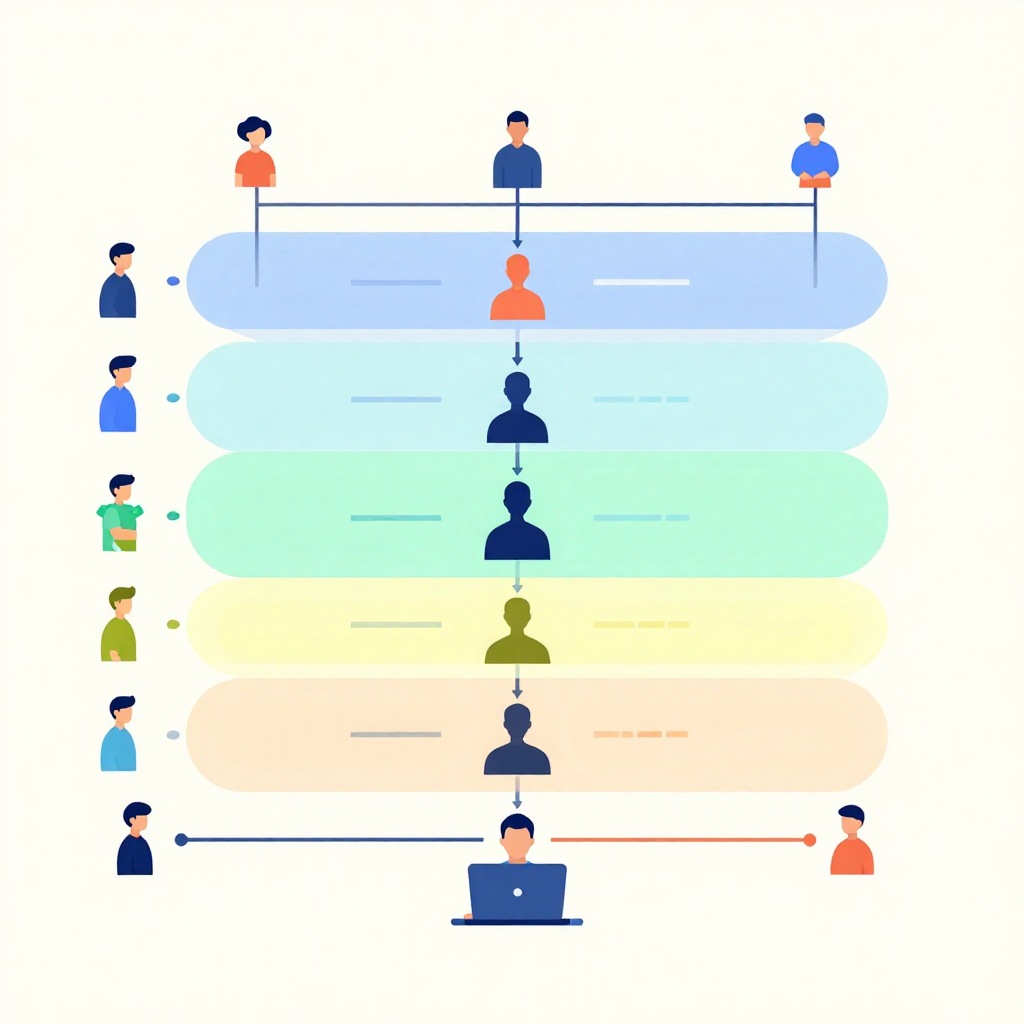
Workflows get decomposed into clear, manageable subprocesses. AI agents are assigned accordingly, working asynchronously or sequentially:
| Subprocess | Assigned Agent | Mode |
|---|---|---|
| Data Extraction | Extraction Agent | Asynchronous |
| Data Verification | Verification Agent | Sequential |
| Decision Making | Decision Agent | Sequential |
| Data Update | Update Agent | Asynchronous |
This modularity increases flexibility and scalability.
3. Communication and Integration
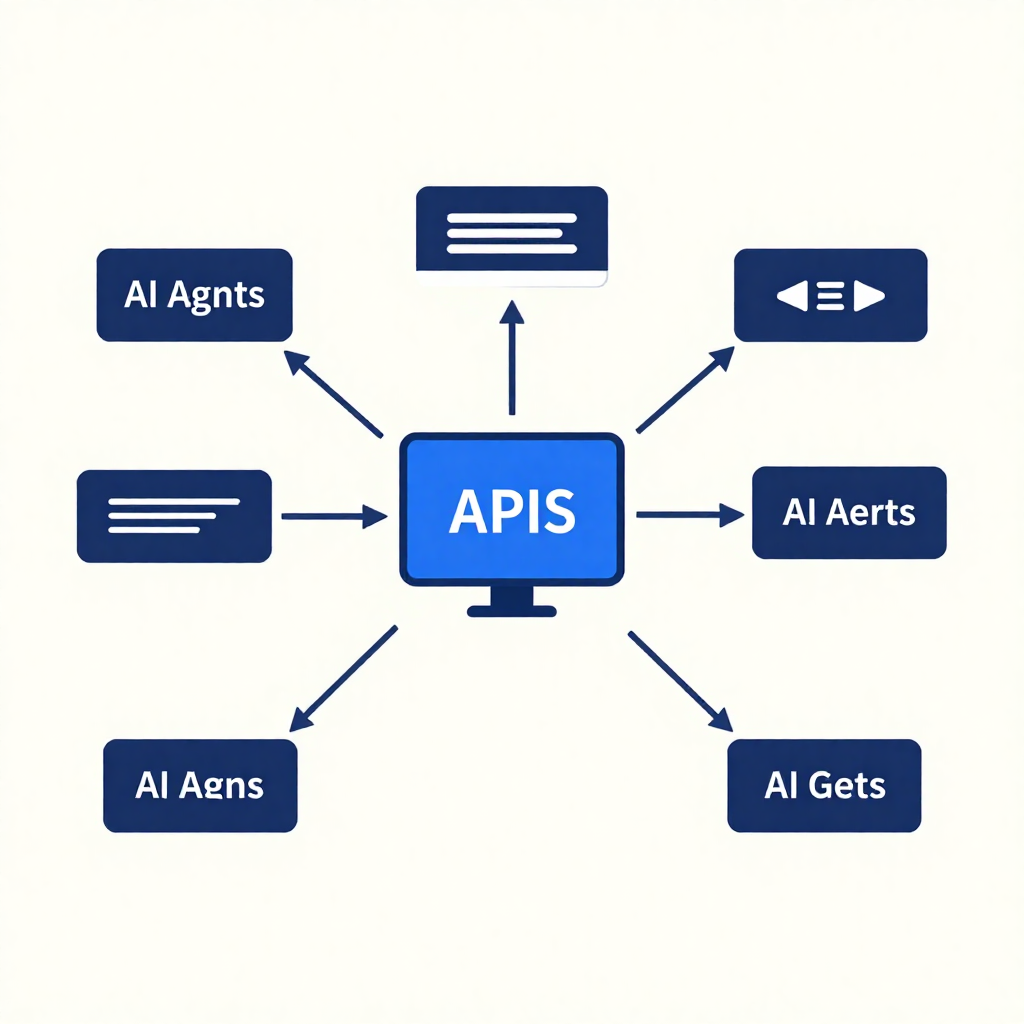
AI agents communicate via APIs, message queues, or protocols like REST and gRPC. Event-driven architectures enable real-time data sharing and trigger-based actions. A centralized workflow manager orchestrates this information exchange and monitors progress.
4. Coordination via Orchestration Layers
An orchestration system governs the entire workflow by:
- Assigning tasks dynamically based on agent availability
- Handling exceptions and retries automatically
- Logging actions for audit and analysis
- Escalating issues when human intervention is necessary
Examples include Apache Airflow, Kubernetes-based workflows, and enterprise RPA solutions like UiPath.
5. Continuous Learning and Adaptation
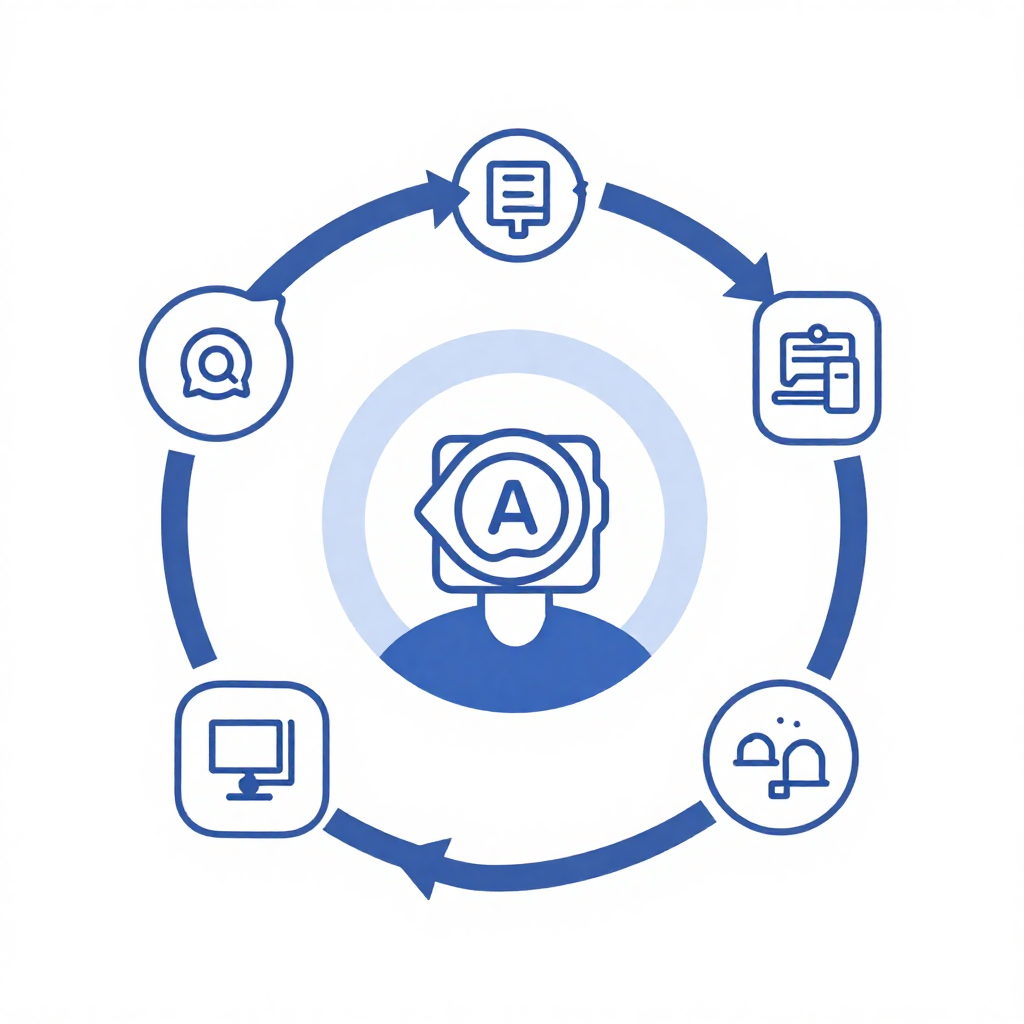
AI agents learn from collective outcomes and shared logs. This shared feedback loop facilitates:
- Reinforcement learning for better decision-making
- Supervised retraining to fix recurring errors
- Process optimization over time
This continuous improvement cycle enhances overall workflow efficiency and accuracy.
Real-World Examples of Multi-Agent AI Collaboration
Customer Service Automation
In customer support centers:
- One AI parses incoming inquiries
- Another retrieves relevant customer history
- A third agent proposes solution templates
- A fourth manages follow-up scheduling
This layered approach reduces average handling time by up to 40%.
Finance and Accounting
Invoice processing workflows integrate:
- OCR-based extraction agents
- Validation and fraud detection agents
- Payment approval bots
This dramatically reduces manual errors and shortens processing cycles.
Supply Chain Optimization
AI agents forecast demand, manage inventory, communicate with suppliers, and schedule deliveries. Their coordination helps avoid stockouts and reduces logistics costs.
Human Resources
Recruitment workflows are streamlined by AI agents performing:
- Resume screening
- Interview scheduling
- Candidate evaluation
- Onboarding task automation
HR teams notice increased hiring efficiency and improved candidate experience.
Step-by-Step Guide to Designing a Multi-Agent AI Workflow
Want to implement this in your business? Here’s a simplified roadmap:
- Identify Workflow Complexity: Map the entire process and note each subtask.
- Define Agent Roles: Assign specialized AI models to each subtask based on capability.
- Design Communication Protocols: Choose APIs or messaging systems for agent interaction.
- Implement Orchestration Layer: Use tools like Apache Airflow or UiPath to manage workflow.
- Develop and Integrate Agents: Train and connect individual agents to the orchestrator.
- Test Thoroughly: Run different scenarios and handle edge cases.
- Deploy and Monitor: Launch in production with logging and monitoring for issues.
- Iterate and Improve: Use agent feedback and logs for continuous learning.
Benefits and Best Practices
- Scalability: Easily add or swap agents without overhauling entire systems.
- Flexibility: Adapt workflows quickly to changing business needs.
- Increased Accuracy: Specialized agents reduce errors in sub-processes.
- Faster Processing: Parallel or asynchronous task handling cuts cycle time.
- Improved Transparency: Logs enable traceability and compliance.
Best Practices:
- Start with clear process mapping
- Choose robust communication protocols
- Adopt advanced orchestration tools
- Invest in continuous training and feedback loops
- Plan for human-in-the-loop escalation mechanisms
Future Trends in Multi-Agent AI Collaboration
Looking ahead, expect rapid innovation:
- AI Agents with Emotional Intelligence: Enhancing customer interactions.
- Autonomous Agents: Independent decision-making with minimal supervision.
- Explainable AI Collaboration: Transparent decision-making across agents enhancing trust.
- Cross-Industry Standardization: Protocols for agent communication becoming universal.
- Increased Use of Edge AI: Distributed agents processing data locally for faster responses.
Such advancements will redefine automated workflows, opening new possibilities for business efficiency worldwide.
Conclusion
Understanding how multiple AI agents can now collaborate to automate complex business workflows is crucial for any company aspiring to digital transformation. By distributing expertise, enabling seamless communication, managing orchestration, and continuously learning, multi-agent AI systems empower organizations with unprecedented automation capabilities. Whether you manage customer service, finance, supply chains, or HR, harnessing collaborative AI agents is the key to scaling complex workflows efficiently and reliably.
Ready to embrace this future? Contact us today! Let’s design a tailored multi-agent workflow that meets your business needs and elevates your automation strategy.
FAQ
What industries benefit most from multi-agent AI collaboration?
While applicable across sectors, finance, customer service, supply chain, and HR have shown significant gains.
How do AI agents communicate effectively?
Through APIs, message queues, REST/gRPC protocols, or event-driven systems enabling real-time data exchange.
Can these agents operate independently?
Agents perform specialized tasks individually but collaborate within an orchestrated framework for complex workflows.
How does continuous learning improve these systems?
Agents use shared feedback and outcomes to self-improve and adapt workflows dynamically.
What orchestration tools are popular?
Apache Airflow, Kubernetes workflows, UiPath, Automation Anywhere, among others.
Recent Blog

Is Your Website Ready for 6G and Spatial Web?
Is Your Website 6G Ready? The Shift Toward Spatial Interfaces…

AI Voice Agents Boost Real-Time Payment Collections
The Voice of Revenue: How AI Voice Agents are Revolutionizing…

WhatsApp Log-Out Disruption: What Business Owners Must Know
Business Owners and Dropshippers: Coping with the WhatsApp "Log-Out" Disruption…
