 :
:  :
: 


 CUBICLES CODERS PVT LTD
Self-Healing AI Bugs: Fix Code Before Users Notice
AI Agents Now Perform “Self-Healing” Code Updates to Fix Bugs Before a User Even Reports Them: Revolutionizing Software Reliability
Estimated reading time: 7 minutes
Key Takeaways
- AI agents can autonomously detect and resolve software bugs before user reports.
- Traditional bug fixing often relies on user input, resulting in operational inefficiencies.
- Self-healing AI leverages continuous monitoring and machine learning for rapid resolutions.
- Industries such as finance, healthcare, and e-commerce are now adopting self-healing systems.
- Future developments include explainable AI and cross-platform capabilities.
Table of Contents
- Introduction
- Understanding the Problem: Why Traditional Bug Fixing Falls Short
- How Self-Healing AI Agents Work: Key Insights
- Real-World Examples of Self-Healing AI in Action
- Step-by-Step Guide to Implementing Self-Healing AI Agents in Your Software Environment
- Benefits and Practical Tips for Maximizing Self-Healing AI Agent Impact
- Future Trends: What’s Next for AI Self-Healing in Software?
- Conclusion
- FAQ
Introduction
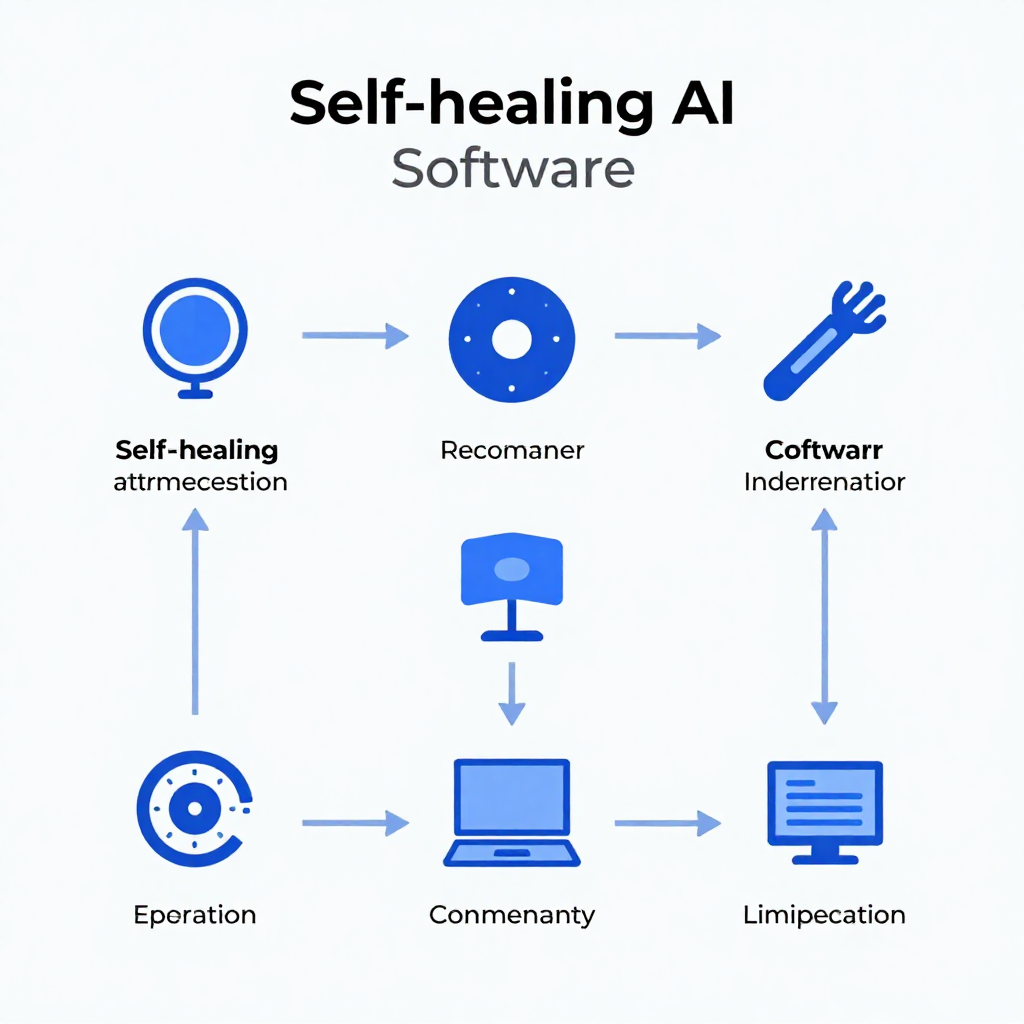
In today’s fast-evolving digital landscape, software reliability is paramount. What if AI agents now perform “self-healing” code updates to fix bugs before a user even reports them? This breakthrough represents a paradigm shift in software maintenance, enabling systems to proactively detect, diagnose, and resolve issues without human intervention. Imagine a world where your applications fix themselves—resulting in minimized downtime, improved user experience, and reduced operational costs.
Globally, industries from finance to healthcare are adopting AI-driven automation to maintain robust and resilient software ecosystems. In India, the booming IT sector is rapidly embracing these advancements to stay competitive on the world stage. This article dives deep into the emergence of AI agents performing self-healing code updates, how they work, their benefits, challenges, and what the future holds for this revolutionary trend.
Understanding the Problem: Why Traditional Bug Fixing Falls Short
Despite advanced testing, bugs and performance glitches are inevitable in software development. According to a report by The National Institute of Standards and Technology (NIST), unresolved software bugs cost the U.S. economy around $59.5 billion annually. Most organizations rely on user-reported issues or periodic audits to identify problems—often leading to reactionary measures rather than proactive solutions.
As systems grow increasingly complex and interconnected, manual debugging and patching become slower and more error-prone. Traditional development and operations teams struggle to keep pace with the speed required to maintain seamless functionality. This lag results in downtime, dissatisfied users, and higher maintenance costs.
Enter AI agents now perform “self-healing” code updates to fix bugs before a user even reports them as a game-changing technology. These autonomous systems promise to revolutionize software upkeep with speed and precision never seen before.
How Self-Healing AI Agents Work: Key Insights
Self-healing AI agents leverage cutting-edge techniques from artificial intelligence, machine learning, and automation to continuously monitor and update software. Here’s a closer look at how these systems operate:
| Step | Description |
|---|---|
| 1. Continuous Monitoring | AI agents scan logs, error messages, and performance metrics in real-time. |
| 2. Anomaly Detection | Machine learning models identify deviations from normal behavior indicating bugs or vulnerabilities. |
| 3. Root Cause Analysis | AI tools analyze code execution paths and data relationships to pinpoint the issue. |
| 4. Patch Generation | Using code synthesis and program repair techniques, AI generates a viable fix. |
| 5. Validation & Testing | Automated test suites evaluate fix effectiveness and safety before deployment. |
| 6. Seamless Deployment | Patches are integrated directly into production environments or staged releases without disrupting services. |
| 7. Logging & Traceability | All changes are securely logged for auditability and rollback if necessary. |
By seamlessly integrating with DevOps pipelines, these AI agents enable true continuous integration and continuous deployment (CI/CD) with intelligent automation at every stage.
Real-World Examples of Self-Healing AI in Action
This technology is no longer futuristic—many organizations across industries have begun implementing AI-powered self-healing systems:
- Microsoft Azure DevOps: Employs AI-driven monitoring tools that proactively identify and patch service outages across distributed cloud infrastructure.
- Netflix: Uses its Chaos Monkey system enhanced with AI capabilities to detect and automatically resolve runtime failures to maintain its streaming service reliability.
- Automotive Industry: AI agents self-heal critical embedded software in autonomous vehicles by automatically updating driving algorithms to fix detected anomalies without manual recalls.
- Banking Sector: Financial institutions deploy AI agents that monitor transaction systems and security layers, autonomously fixing vulnerabilities before exploitation.
- E-commerce Platforms: Large retailers utilize AI self-healing to keep checkout and inventory systems optimized during heavy traffic without human intervention.
These cases illustrate how self-healing AI agents dramatically reduce downtime, improving user satisfaction and protecting brand reputations.
Step-by-Step Guide to Implementing Self-Healing AI Agents in Your Software Environment
Ready to bring self-healing AI agents into your organization? Here’s a practical roadmap to get you started:
- Assess Current Infrastructure: Evaluate your existing DevOps pipelines, monitoring tools, and software architecture.
- Choose the Right Tools: Select AI platforms and frameworks with proven self-healing capabilities, such as Microsoft’s Azure Automanage or open-source program repair libraries.
- Implement Continuous Monitoring: Integrate advanced logging and AI-based anomaly detection systems tailored to your applications.
- Develop Automated Test Suites: Build comprehensive automated tests to verify patches generated by AI agents.
- Create Safeguards: Establish rollback mechanisms, audit logs, and manual approval workflows as needed for compliance.
- Deploy Gradually: Start with non-critical applications or subsystems to minimize risk.
- Train Your Teams: Educate developers and operations teams on working with AI tools and interpreting reports.
- Iterate and Improve: Use feedback and telemetry to enhance AI models and patch generation accuracy.
Following this step-wise approach balances innovation with risk management, ensuring successful adoption.
Benefits and Practical Tips for Maximizing Self-Healing AI Agent Impact
Adopting self-healing AI offers numerous benefits:
- Rapid Bug Detection and Resolution: Immediate identification and fixing minimizes user disruptions.
- Continuous Deployment: Seamlessly integrate fixes into live environments with zero downtime.
- Developer Productivity: Allows engineering teams to focus on feature development, not firefighting.
- Cost Efficiency: Reduces resources spent on debugging, patch management, and incident responses.
- Improved Software Quality: Proactive maintenance leads to higher reliability and user trust.
Tips for success:
- Prioritize transparency by keeping detailed logs of AI-generated changes.
- Regularly retrain AI models to adapt to evolving codebases.
- Combine AI insights with human oversight for sensitive or mission-critical systems.
- Leverage containerization and microservices architectures for easier rollback and patching.
- Monitor security impacts closely to prevent potential vulnerabilities introduced by autonomous updates.
Future Trends: What’s Next for AI Self-Healing in Software?
The future of AI agents now performing “self-healing” code updates is bright, with several exciting developments on the horizon:
- Explainable AI (XAI): Enhanced transparency helping developers understand AI decisions for greater trust.
- Cross-Platform Self-Healing: Expanding to edge devices, IoT ecosystems, and hybrid cloud environments.
- AI Collaboration: Multiple AI agents working together to resolve complex interdependent bugs.
- Integration with DevSecOps: Automatic fixes focusing equally on security patching to combat cyber threats.
- Natural Language AI Interfaces: Simplifying interaction with self-healing systems through conversational commands.
These trends point to a future where software maintenance is largely automated, intelligent, and aligned with business goals.
Conclusion
AI agents now perform “self-healing” code updates to fix bugs before a user even reports them, marking a revolutionary step in software reliability and operational efficiency. By automating bug detection, patch generation, testing, and deployment, organizations can drastically reduce downtime and improve end-user experiences. Although challenges around validation and security remain, careful implementation and ongoing refinement unlock powerful benefits across industries worldwide.
Embrace the power of self-healing AI agents today to future-proof your software ecosystems and stay ahead in the competitive digital economy. Contact us today! to learn how we can help you integrate self-healing AI agents into your software development lifecycle.
FAQ
How do AI agents know which bugs to fix autonomously?
AI agents analyze real-time performance data, logs, and user behavior patterns using anomaly detection models to identify unusual activity that indicates bugs. Once detected, they trace root causes and generate targeted fixes.
Are self-healing updates safe to deploy without human approval?
While many fixes can be fully automated, organizations typically implement safeguards such as test validations, rollback mechanisms, and approval workflows to ensure safety, especially for critical systems.
Can self-healing AI agents work with legacy software?
Yes, though implementation complexity depends on available monitoring hooks and modularity of legacy systems. AI agents are more effective and easier to integrate with modern CI/CD pipelines and microservices.
Which industries benefit the most from self-healing AI?
Industries with large-scale, complex software environments like cloud services, finance, telecommunications, automotive, and healthcare see significant advantages due to reduced downtime and rapid fixes.
What are some platforms offering self-healing AI capabilities?
Microsoft Azure Automanage, Google Cloud Operations Suite, Dynatrace Davis AI, and open-source tools like AutoFix provide frameworks and integrations supporting self-healing in software.
Recent Blog
Is Your Website Ready for 6G and Spatial Web?
Is Your Website 6G Ready? The Shift Toward Spatial Interfaces…

AI Voice Agents Boost Real-Time Payment Collections
The Voice of Revenue: How AI Voice Agents are Revolutionizing…
WhatsApp Log-Out Disruption: What Business Owners Must Know
Business Owners and Dropshippers: Coping with the WhatsApp "Log-Out" Disruption…
